Mobile brokerage platforms compared: Fidelity Brokerage, Vanguard Brokerage, and Ally Invest
A neutral documentation review of Fidelity Brokerage, Vanguard Brokerage, and Ally Invest U.S. mobile brokerage fees, execution, custody, safeguards, and limits.
In this comparison



Fidelity Brokerage, Vanguard Brokerage, and Ally Invest all present mobile first ways to place trades and monitor markets. Their public documents describe different products, fee layers, account arrangements, and eligibility rules. This is a U.S. documentation review checked September 8, 2026. It is not hands on testing, a ranking, or a recommendation.
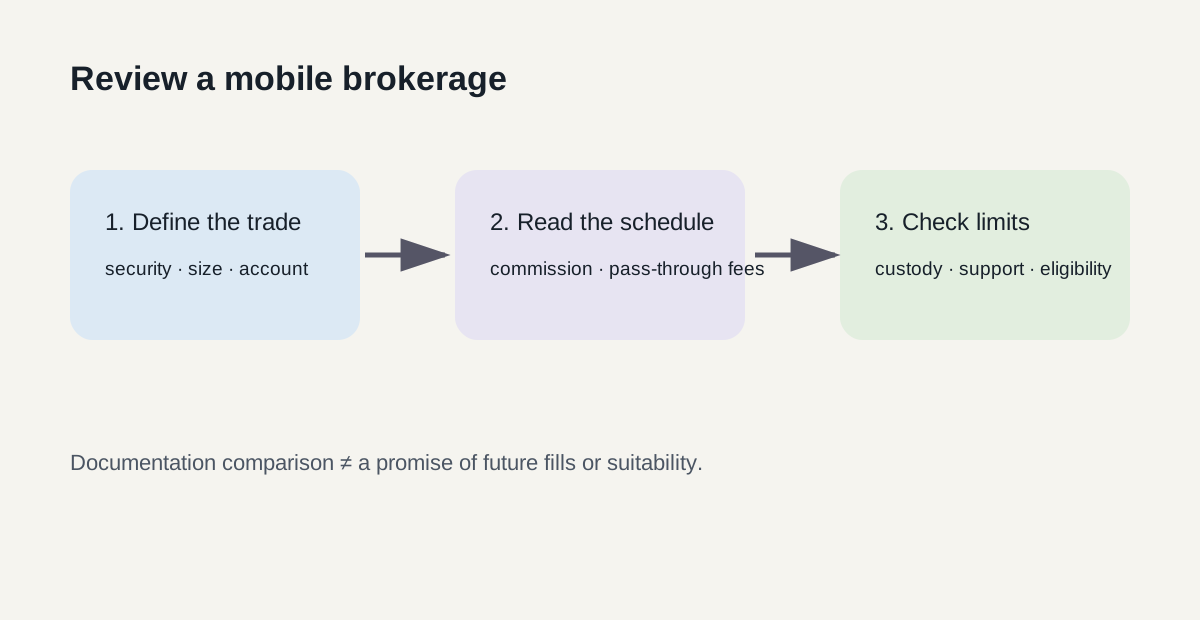 A repeatable review path: identify the trade, read the schedule, then check custody and service limits.
What “mobile platform” leaves out
An app is only the visible layer. The legal broker entity, clearing arrangement, account type, order routing, market data, cash program, and support channel affect the result. A polished interface cannot establish that a trade will fill at a particular price or that every product is available in every state or account.
The three providers describe a mix of self directed brokerage services. Fidelity Brokerage’s legal library separates Fidelity Brokerage Services LLC and National Financial Services LLC. Vanguard Brokerage’s disclosures identify Vanguard Marketing Corporation as its SEC registered broker dealer. In the U.S., Ally Invest says brokerage services are provided through Ally Invest Securities LLC. Check the entity named in the agreement you would sign.
Fee comparison: start with the trade you will make
Scroll sideways or use arrow keys to read the full table.
| Question | Fidelity Brokerage | Vanguard Brokerage | Ally Invest |
|---|---|---|---|
| U.S. listed stocks and ETFs | $0 commission is advertised for eligible self directed trades; pass through and service fees can apply | $0 commission is advertised for eligible U.S. listed stocks and ETFs | $0 commission is advertised for eligible U.S. residents trading U.S. investments; other fees apply |
| Options | Commission free wording has product and regulatory fee exceptions | $0 commission wording; certain index option and other contract fees apply | $0 commission wording for eligible stock options; index, exchange, and regulatory fees may apply |
| Margin | Interest and eligibility depend on the current agreement and rate schedule | Margin interest and approval apply | Margin rate and eligibility can change; read the current schedule |
| Other layers | Account service, transfer, wire, regulatory and other fees may apply | Account service, transfer, wire, regulatory and other fees may apply | Low priced securities, options, transfer, wire, regulatory and other service fees may apply |
“Commission free” is a narrow label. Fidelity publishes $0 online commissions for eligible U.S. stocks and ETFs, with other transaction and service fees possible. Vanguard publishes a commission and fee schedule that varies by asset and qualifying assets. Ally Invest publishes $0 commissions for eligible U.S. stocks and ETFs, while options are $0 plus 50 cents per contract and low priced securities have separate charges. The applicable account, resident status, security, order, and promotion control the outcome.
Before comparing a headline price, write down the security, buy or sell direction, number of shares or contracts, order channel, account type, currency, and whether you borrow. Add margin interest, transfer and wire fees, data subscriptions, FX or ADR charges, and fund expenses where relevant. The brokerage-fees checklist provides a reusable worksheet.
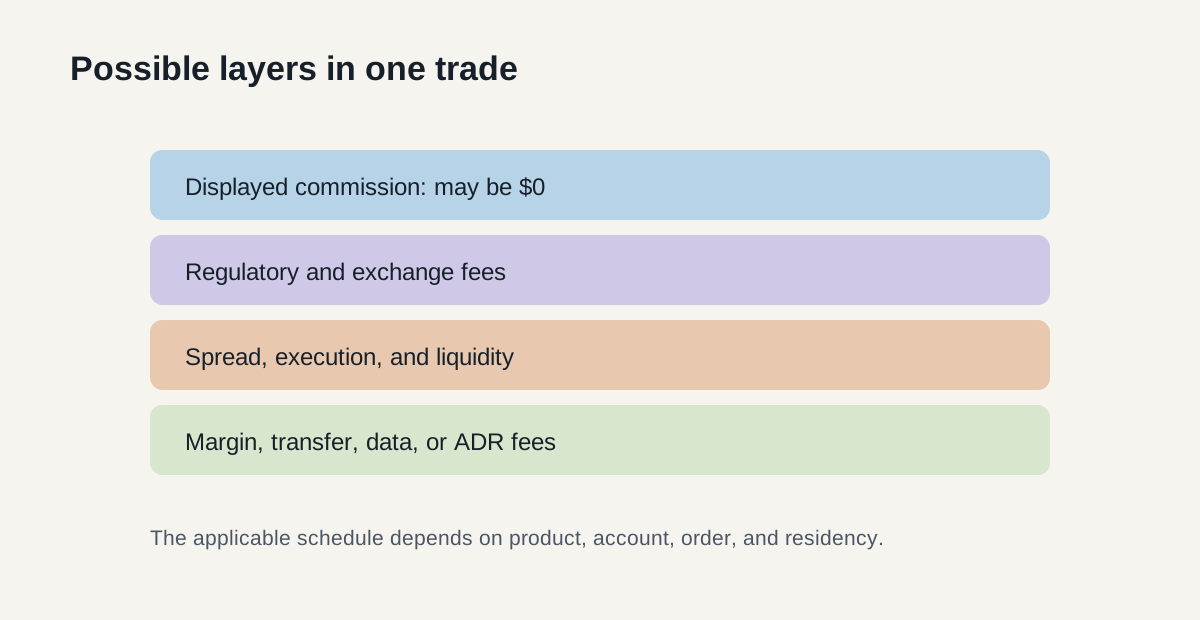 A commission line is only one possible part of the cost of a trade.
Product scope and platform workflow
Fidelity describes stocks, ETFs, options, mutual funds, and fractional trading. Vanguard Brokerage Services describes brokerage accounts, mutual funds, ETFs, stocks, options, and fixed income. Ally Invest describes self directed stocks, ETFs, options, mutual funds, bonds, and CDs, with separate robo and advice services. Product availability and eligibility can vary by jurisdiction, account approval, and release.
These descriptions suggest different workflows, but they do not measure usability. A beginner should inspect whether the app makes cash versus margin status clear, how order previews show estimated costs, which quotes are delayed or real time, and how to reach support. A more configurable order ticket can expose more controls and more ways to misunderstand an order. Treat the feature list as a prompt for your own needs, not as evidence of better execution.
Execution: an app cannot promise your fill
FINRA Rule 5310 requires firms to use reasonable diligence to seek the most favorable terms reasonably available for a customer order under the circumstances. The relevant questions include price, speed, likelihood of execution, order size and type, liquidity, and transaction costs. Payment for order flow and other routing arrangements should be read in the firm’s best execution and Rule 606 disclosures.
Fidelity Brokerage, Vanguard Brokerage, and Ally Invest each publish disclosures about execution, order routing, or related risks. Each provider publishes execution or order handling information; these documents describe process and risks, not a guaranteed fill. That warning applies to mobile trading generally. A screenshot, a quoted spread, or a past fill does not predict the next order.
For a careful review, compare like for like: the same security, order type, time window, and account conditions. Read the current order routing reports and customer agreement. See broker execution quality for the questions that belong in that review.
Custody, protection, and what they do not cover
Fidelity Brokerage Services LLC, Vanguard Marketing Corporation, and Ally Invest Securities LLC states that their U.S. brokerage services are associated with FINRA and SIPC memberships in their disclosures. SIPC protection concerns missing eligible cash and securities if a member brokerage fails, subject to statutory limits and account grouping. It does not protect against a market decline, a bad investment decision, a platform outage, or an ordinary loss in value. Futures, crypto, and other products can have separate entities and protections.
Confirm the legal entity, clearing relationship, covered account, excluded product, and current customer agreement before transferring assets. Read what SIPC protects. Security controls such as two factor authentication and account alerts are useful safeguards, but they do not remove market, operational, or fraud risk.
Service limits to put beside the feature list
Ask each provider the same operational questions: Which residents can open the account? Is fractional trading available for the security I want? What are deposit and withdrawal holds? Are transfers and wires priced? What happens during an outage? Can I reach a person, and during which hours? Are options, margin, crypto, futures, and fixed income subject to separate approval or agreements?
Read promotion terms separately from permanent pricing. Rates, rewards, coverage arrangements, supported securities, app features, and regulatory fees can change. A page retrieved today is evidence of the page’s stated terms, not a guarantee that the same terms will apply after an application.
A neutral decision worksheet
- Define your products, account type, jurisdiction, and order pattern.
- Save each provider’s current fee schedule, customer agreement, and relevant risk disclosure.
- Record the full cost layers for a representative order.
- Compare cash, margin, settlement, support, transfer, and outage policies.
- Read the execution and routing disclosures for the account and products involved.
- Confirm SIPC or other protection with the actual legal entity and list of exclusions.
- Recheck changing terms immediately before applying.
The choice belongs to the reader’s circumstances. This article supplies a method for asking comparable questions and leaves product suitability, tax treatment, and legal advice to the reader’s qualified advisers.
Official product links: Visit official product page, Visit official product page, Visit official product page.