Broker fee comparison: commissions are only one line
Compare brokerage commissions, spreads, account charges, fund expenses, margin interest, transfer fees, and other costs before opening an account.
In this guide
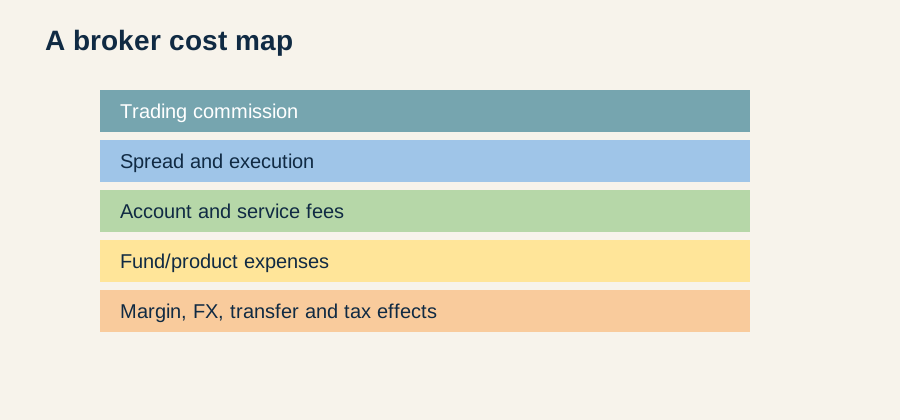 A fee comparison maps commissions, execution, account, product, financing, currency, transfer, and tax effects.
Short answer: compare the total cost of using an account, not only its advertised commission. Check trading spreads and execution, account and transfer charges, fund expenses, margin interest, foreign-exchange costs, and taxes. Fees change by broker, product, order type, balance, and jurisdiction. This checklist uses U.S. educational sources checked 2026-09-08 and is not a provider ranking or personal advice.
1. Trading commission is the starting point
“$0 commission” usually describes a narrow transaction—often online U.S. stocks or ETFs. Ask what is excluded: broker-assisted trades, options contracts, bonds, mutual funds, fractional shares, OTC securities, or foreign markets. A commission schedule may also distinguish opening, closing, assignment, exercise, and regulatory fees.
2. Spread and execution can still cost money
The bid-ask spread is the gap between the best displayed buy and sell quotes. A market order can fill at a different price, while a limit order can remain unfilled. Wider spreads, volatility, large size, and extended hours can increase friction. Read the companion market-order vs. limit-order guide and ask how the broker measures price improvement, routing, and execution quality.
3. Account and service charges
Look for annual or quarterly account fees, inactivity charges, paper-statement fees, phone-trading fees, research or data subscriptions, wire fees, returned-payment fees, and minimum-balance requirements. “No minimum” may apply to opening only; a service or sweep feature can have separate terms.
4. Fund and product expenses
If you buy a mutual fund or ETF, the fund’s expense ratio is deducted inside the product and does not appear as a trading commission. Sales loads, redemption fees, bid-ask spreads, securities-lending effects, and tracking difference can also matter. Continue to fund expense ratio vs. total cost for the distinction between one disclosed ratio and broader ownership cost.
5. Margin interest and borrowing
Margin is a loan. Interest can vary with a benchmark, balance tier, and broker spread, and it directly reduces returns. A margin account can also create maintenance requirements and forced-sale risk. Ask for the current rate, calculation method, and agreement before enabling borrowing; do not treat buying power as free money.
6. Transfers, currency, and taxes
Outgoing transfers, account closure, wire and foreign-exchange conversion fees can matter more than a small trading commission if you move money often or invest across currencies. Regulatory assessments and exchange fees may be passed through. Taxes are not usually a broker fee, but withholding, reporting, and forced-sale consequences affect the total economics and depend on your jurisdiction.
A transparent comparison example
Broker A charges $0 online stock commission but a 0.20% currency conversion spread and a $75 outgoing-transfer fee. Broker B charges $5 per trade, no transfer fee, and a narrower conversion spread. An investor making two U.S.-dollar trades monthly and one international transfer should calculate the relevant year, not assume A is cheaper from the headline. The numbers are hypothetical and exclude taxes, market movement, and product expenses.
Questions to put in a comparison sheet
- Which products and order channels qualify for the headline commission?
- What regulatory, exchange, contract, assignment, or exercise charges apply?
- What spread, routing, and price-improvement information is available?
- Are account, inactivity, data, statement, wire, and transfer fees charged?
- What expense ratios, loads, redemption fees, or platform charges apply to the products I use?
- What is the margin rate and how can it change?
- What currency conversion method and markup apply?
- Which taxes or withholding obligations are mine, and what reports will the broker provide?
- Are fees different by balance, residency, account type, or trading venue?
- Where is the dated fee schedule and what triggers an update?
Common mistakes
Comparing only two large brokers; ignoring small recurring charges; treating fund expenses as “free” because no commission appears; assuming a narrow spread is guaranteed; and relying on an old screenshot or promotional page. Save the fee schedule you reviewed and recheck it before opening or transferring.
The rule to remember
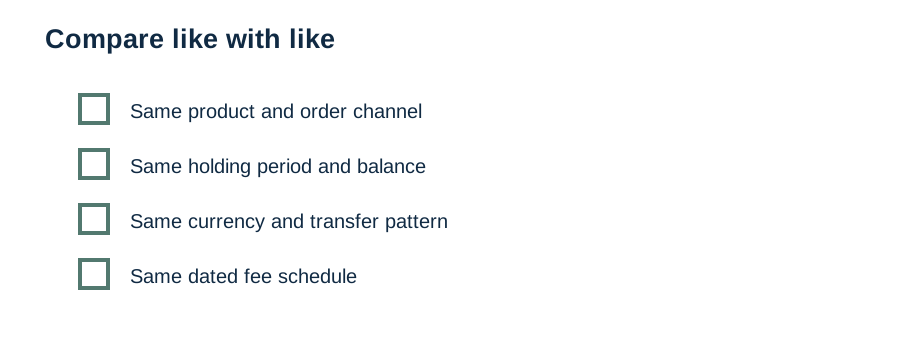 Compare the same product, behavior, currency, balance, and dated schedule.
The cheapest-looking commission is one line in a cost map. Compare the costs that fit your actual behavior, products, currencies, balances, and transfers, then check execution and service quality. A fee table is evidence to review, not a promise of future total cost.
U.S.-focused education; fees, rates, taxes, products, and jurisdiction rules require current broker-level verification before publication.