Dividend ETFs compared: VIG, SDY, and DGRO
Compare VIG, SDY, and DGRO using official issuer objectives, screens, expense ratios, distributions, and risks.
In this comparison



VIG, SDY, and DGRO all seek dividend-oriented U.S. equity exposure, but they use different index rules. VIG focuses on dividend growth, DGRO combines dividend growth and quality screens, and SDY follows the S&P High Yield Dividend Aristocrats Index. None is automatically “best”; the useful comparison is objective, portfolio construction, cost, access, and risk.
This package replaces the assigned SCHD with SDY because current first-party SDY documentation and an exact State Street logo were verifiable, while an approved high-resolution Schwab mark was not accessible in this research pass.
At a glance
Scroll sideways or use arrow keys to read the full table.
| ETF | Issuer | Index/objective | Expense ratio checked | Distribution |
|---|---|---|---|---|
| VIG | Vanguard | S&P U.S. Dividend Growers Index | 0.04% (Vanguard page, 2026-02-02) | Quarterly |
| DGRO | iShares / BlackRock | U.S. dividend-growth companies | 0.08% (current prospectus page) | Quarterly |
| SDY | State Street SPDR | S&P High Yield Dividend Aristocrats Index | 0.35% gross (State Street page, 2026-09-07) | Quarterly |
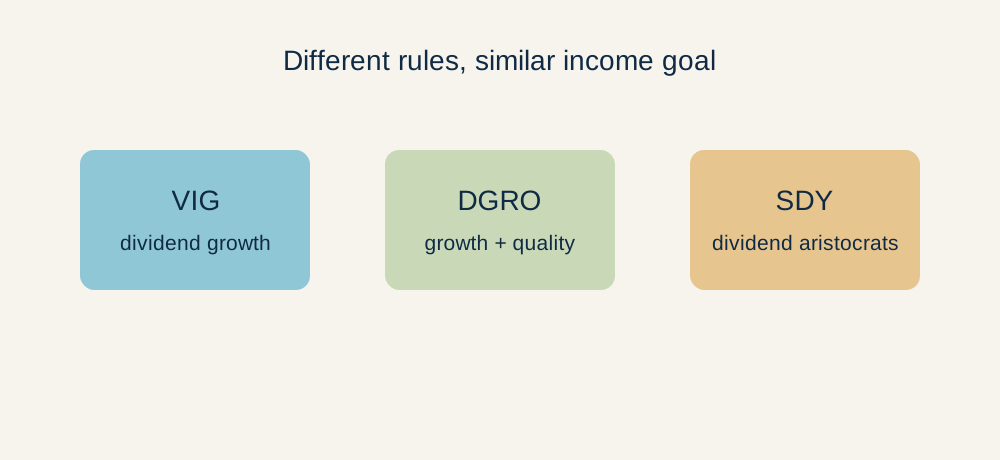 The three funds use different screening ideas; the diagram is conceptual, not a performance ranking.
VIG: dividend growth orientation
Vanguard describes VIG as a passively managed, full-replication ETF seeking the S&P U.S. Dividend Growers Index. The product page emphasizes companies with a record of growing dividends year over year. Dividend growth is not the same as the highest current yield: a fund can prefer a history of increases while excluding the highest-yielding companies.
DGRO: growth plus eligibility screens
iShares describes DGRO as tracking an index of U.S. equities with a history of consistently growing dividends. Its prospectus materials describe eligibility requirements including at least five years of uninterrupted annual dividend growth and a payout-ratio screen, with the highest-yielding decile excluded before the dividend-growth and payout filters. These rules can produce a different portfolio from a high-yield strategy.
SDY: dividend aristocrat and yield weighting
State Street says SDY seeks to track the S&P High Yield Dividend Aristocrats Index. The index includes companies with a history of dividend payments and weights constituents by indicated yield, with reviews and reweighting described on the product page. That construction can create different sector and valuation exposures from growth-oriented dividend screens.
Cost is one input, not the verdict
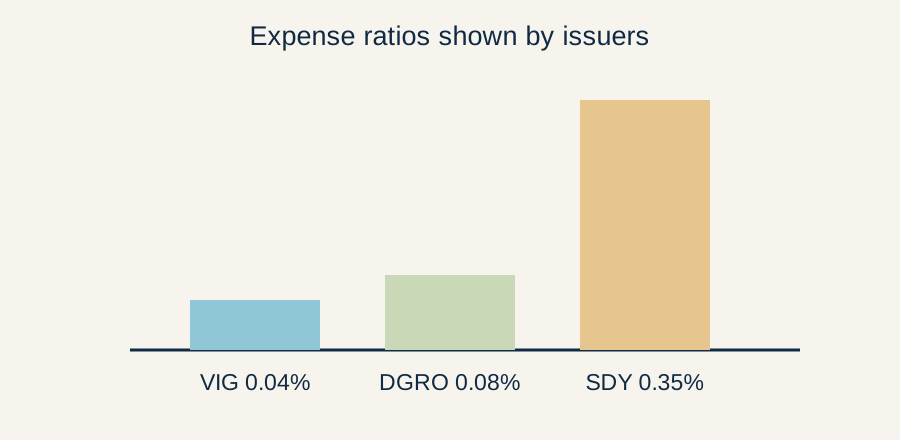 Issuer figures checked on the dates shown above; not a return chart.
The displayed ratios differ, but total cost also includes spreads, brokerage charges, taxes, currency conversion, and account access. A lower ratio does not establish better holdings, lower risk, or a better net outcome. See expense ratio vs total cost.
Risks and fit questions
Dividend funds remain equity funds: prices can fall and dividends can be reduced or omitted. A screen based on past dividend behavior does not guarantee future payments. Yield-weighting can increase exposure to companies whose prices have fallen or whose fundamentals are under pressure. Growth screens can underweight high-yield sectors. All three can overlap with broad-market funds and with each other.
Ask: Is the goal current income, rising distributions, quality screens, or a particular index exposure? What concentration, sector, valuation, tax, and currency risks would the fund add to the rest of the portfolio? Check the current prospectus, holdings date, and account terms before acting.
General education only. No overall winner or individualized recommendation is provided. Investing can result in loss.