Robo-advisers compared: Betterment, Wealthfront, and Vanguard Digital Advisor
Compare Betterment, Wealthfront, and Vanguard Digital Advisor on fees, minimums, custody, and tax features using official sources.
In this comparison



There is no universal winner among Betterment, Wealthfront, and Vanguard Digital Advisor. The practical difference is how each combines its advisory fee, opening minimum, tax features, and custody relationship. This comparison uses official U.S. pages checked on September 8, 2026; terms and eligibility can change.
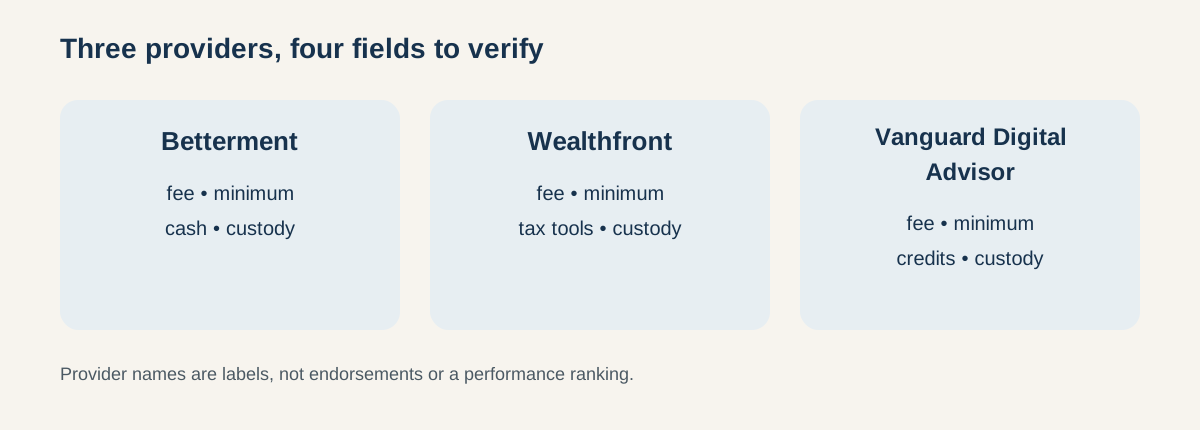
Figure: A fact grid, not a ranking or endorsement.
Quick comparison
Scroll sideways or use arrow keys to read the full table.
| Service | Published advisory fee | Opening minimum | Important distinction |
|---|---|---|---|
| Betterment Investing | $5/month or 0.25% annually when the stated balance or recurring-deposit condition is met | No minimum for Digital investing | Premium advice has a $100,000 minimum |
| Wealthfront Automated Investing | 0.25% annually | $500 | Markets tax-loss harvesting and other tax features; eligibility matters |
| Vanguard Digital Advisor | Net fee varies; gross fee 0.20% for all-index or 0.25% for active/index mix before credits | $100 per Vanguard Brokerage Account | First 90 days have no advisory fee; fund expense ratios still apply |
The table is a starting point, not a total-cost calculation. Fund operating expenses, cash yield, trading or transfer terms, optional planning, and tax consequences can change the result.
Betterment: low entry barrier, tiered pricing
Betterment’s pricing page currently describes Digital investing as $5 per month or 0.25% per year when a household has at least $24,000 or recurring deposits totaling at least $200 per month. It also says there is no minimum balance for Digital investing. Betterment’s help material identifies $100,000 as the Premium threshold. Confirm the exact billing condition and household definition before opening.
The low opening minimum can matter more than a headline percentage for a first account. At a $10,000 balance, 0.25% would be $25 per year before fund expenses, while a $5 monthly charge would be $60 per year. That is a simple illustration, not a quote: the applicable Betterment condition determines which pricing path applies.
Betterment markets tax-management tools, but a feature label is not a promise of tax savings. Ask which account types qualify, what trades may be generated, and whether the feature fits your tax situation. Review the adviser and custody disclosures separately from the marketing page.
Wealthfront: a clear percentage fee and $500 minimum
Wealthfront’s pricing page states a 0.25% annual advisory fee for Automated Investing and a $500 minimum. Its official materials describe tax-loss harvesting and other tax-oriented features. Those tools may create tax lots and transactions; they do not guarantee a lower tax bill or better after-tax returns. Check eligibility, account type, wash-sale handling, and the current client agreement.
At $10,000, a 0.25% advisory fee is approximately $25 per year before fund expenses. That makes the percentage easy to model, but it does not make the service suitable for every goal. Compare portfolio design, withdrawal rules, human support, and the separate custodian relationship.
Vanguard Digital Advisor: $100 enrollment minimum and credited advisory fee
Vanguard’s official Digital Advisor page says each Vanguard Brokerage Account needs at least $100 to enroll. It describes a gross annual advisory fee of 0.20% for all-index portfolio options or 0.25% for an active/index mix, reduced by credits for qualifying revenue retained from investments. The net fee varies by allocation, account type, and holdings. Vanguard also advertises no advisory fee for the first 90 days, while fund expense ratios still apply.
Vanguard Digital Advisor is an all-digital service. Read Vanguard Advisers’ current Form CRS and Digital Advisor brochure to confirm the advisory relationship, portfolio option, credits, and eligible account types.
Fees are only one layer
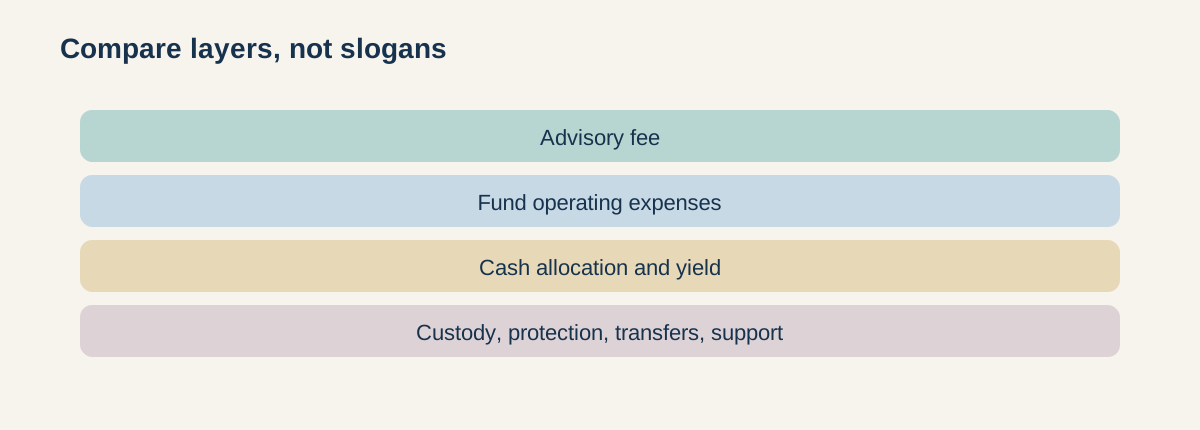
Figure: Separate the visible advisory fee from fund expenses, cash design, and custody/protection questions.
Use the same hypothetical balance for each provider. Write down: advisory fee, fund expenses, account minimum, transfer or closure charges, tax-feature eligibility, and optional planning fees. Then ask what you receive for the fee: rebalancing, tax management, financial planning, human access, or simply automated portfolio maintenance.
Custody, protection, and cash are different questions
An adviser designs or manages a portfolio; a custodian holds assets and processes transactions. SIPC protection is about the failure or financial trouble of a member brokerage and has limits. It does not protect against market losses, bad advice, or a disappointing portfolio. FDIC insurance for an eligible bank deposit is a separate regime with separate conditions. Do not treat either protection as a product-quality score.
For each provider, find the current Form CRS, Form ADV, advisory agreement, and account disclosures. Confirm who holds securities, where cash sits, what happens during a transfer, and which entity answers a complaint. The SEC’s Investment Adviser Public Disclosure database is a useful independent identity check.
Tax features need a suitability check
Tax-loss harvesting, direct indexing, and tax-coordinated portfolios can be useful in some taxable accounts and irrelevant or unavailable in others. They can also create trading, wash-sale, concentration, or recordkeeping issues. Ask:
- Is the feature available for this account type and balance?
- Which securities and tax lots are included?
- How are wash-sale conflicts handled across accounts?
- What records will I receive for my tax preparer?
- Can I turn the feature off?
Do not compare tax marketing as if it were a guaranteed return. A tax feature changes the workflow and potential tax outcomes; it does not remove market risk.
A decision method without a “best” label
Start with constraints. If you need a very low opening minimum, Betterment’s published Digital terms may be the first page to inspect. If you prefer a percentage fee with a $500 minimum and want to study tax tools, inspect Wealthfront’s disclosures. If you want a $100 Vanguard account minimum and a fee reduced by investment credits, examine Digital Advisor’s current disclosures. These are investigation paths, not recommendations.
Before opening, download the current agreements and record the date. Recheck fees, minimums, portfolio methodology, cash treatment, tax-feature eligibility, human support, transfer-out process, and complaints route. If an answer is missing, treat it as an unresolved comparison field.
A worked $10,000 comparison
Assume a U.S. taxable account with $10,000, no withdrawals, and no change in provider terms. Under that simplified assumption, a 0.25% advisory fee is about $25 per year before fund expenses. A $5 monthly charge is $60 per year. Vanguard’s gross 0.20% all-index rate would be about $20 per year before credits and fund expenses, but the net amount depends on the account and holdings. This is not a forecast and does not include taxes, trading effects, bid-ask spreads, or changes in balance.
The exercise shows why a single “cheapest” label is unreliable. A household just below Betterment’s percentage-fee condition may face a different charge from a household above it. Vanguard’s net fee depends on credits and portfolio option. Wealthfront’s tax tools may be relevant only in eligible taxable accounts. Put each assumption in writing before comparing totals.
Questions to ask support
Ask each provider the same operational questions: Who is the custodian? What happens to cash? How quickly can I withdraw? Are fractional shares used? What is the transfer-out process? Which person or team handles a complaint? Can I speak with a human, and at what service tier? Are tax documents consolidated across linked accounts? Does the service use affiliated funds, bank deposits, or other arrangements that create a conflict or incentive?
These questions do not imply wrongdoing. They make the service legible. Keep screenshots or downloaded PDFs with the date checked, because a pricing page is not the same document as an advisory agreement or Form CRS.