Individual bonds vs. bond funds: cash flows, pricing, and reinvestment
Compare individual bonds with bond funds across maturity, cash flows, pricing, diversification, fees, liquidity, and reinvestment risk.
In this guide
The central difference is the shape of the promise. An individual bond has its own maturity and scheduled cash flows; a bond fund owns a changing pool whose shares are priced from the portfolio’s market value. If an individual bond’s issuer pays as promised and you hold it to maturity, the bond is scheduled to return face value. A bond fund does not promise one fixed principal repayment date to each shareholder.
That does not make one structure universally safer. Both can lose value, face credit and interest-rate risk, and produce results affected by fees, taxes, liquidity, inflation, and reinvestment. The right comparison starts with the cash-flow experience you need, not with a label such as “income.”
Comparison at a glance
Scroll sideways or use arrow keys to read the full table.
| Question | Individual bond | Bond fund (mutual fund or ETF) |
|---|---|---|
| What do you own? | A specific debt claim with stated terms | Shares in a portfolio of debt securities |
| Maturity | One scheduled maturity, subject to calls/default | Holdings mature, are sold, and replaced; no single portfolio maturity |
| Principal | Face value due at maturity if obligations are met | Share price changes; no promise of face-value repayment |
| Income | Contractual coupons or discounts under the bond terms | Distributions from portfolio income and realized results |
| Diversification | Must be built across issues yourself | Built into the portfolio, but depends on mandate and holdings |
| Pricing | May be less transparent or liquid between trades | NAV for mutual funds; exchange price and spread for ETFs |
| Reinvestment | You decide what to do with coupons and maturities | Manager reinvests within the mandate; distributions may be reinvested |
The individual-bond experience
An individual bond is a security issued by a company, government, municipality, or other obligor. Its offering document states the coupon or discount, maturity, payment dates, seniority, call provisions, and other terms. If the issuer meets its obligations and you hold the bond to maturity, Investor.gov explains that the holder receives the face value plus interest, subject to default risk.
Market value still moves before maturity. If comparable yields rise, an older bond’s price generally falls; if yields fall, its price may rise. Selling early turns that market value into your outcome. A bond can therefore be “held to maturity” in theory but unsuitable if you may need liquidity sooner.
You also carry concentration risk. One issuer, sector, state, or maturity can dominate the result. Building a diversified ladder requires enough capital, issue selection, ongoing monitoring, and attention to minimum denominations and transaction costs. A high coupon does not remove credit risk, and a government label does not remove rate or inflation risk.
The bond-fund experience
A bond fund is an investment company that owns many bonds or other debt securities. Investor.gov notes that funds can differ widely in credit quality, duration, volatility, prepayment exposure, and other features. A fund may focus on Treasuries, municipalities, corporate debt, mortgages, high-yield bonds, or a mixture.
Most mutual funds transact with the fund at its calculated net asset value (NAV), generally at the next available pricing time. Bond ETFs trade on an exchange during the day; their market prices can be above or below NAV and include a bid-ask spread. The wrapper changes the transaction process, not the underlying risks.
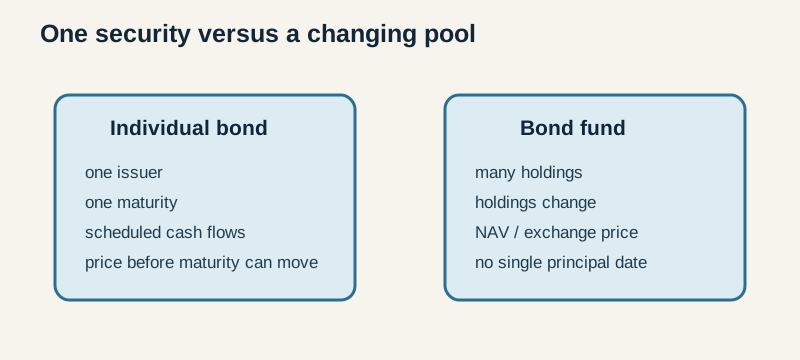 An individual bond has one issuer and maturity; a fund has pooled holdings and no single principal date.
The portfolio is continuously managed. Holdings mature, are sold, or are replaced, and the fund’s duration and credit mix can change. A fund may distribute interest income, realized gains, or other amounts, but a distribution is not the same as a guaranteed coupon from one issuer.
A transparent cash-flow example
Imagine a $1,000 five-year bond paying a 5% annual coupon. If the issuer pays every obligation and you hold to maturity, the scheduled cash flows are $50 per year and $1,000 principal at maturity. Your market price can still fluctuate during the five years, and your realized return depends on purchase price, taxes, fees, and what you do with coupons.
Now compare a fund that initially owns this bond plus 99 other issues. The fund may receive coupons, but some holdings mature next year, some are sold, and new bonds enter the portfolio. Its share price changes daily with rates, spreads, flows, and portfolio decisions. Even if the original bond reaches maturity, a fund shareholder does not receive a separate $1,000 repayment tied to that bond.
The example is hypothetical and does not establish that either choice is suitable.
Pricing, duration, and interest-rate risk
Both structures respond to changing yields, but the path differs. An individual bond’s price reflects its remaining cash flows, yield, credit spread, liquidity, and optionality. A fund’s NAV reflects the market value of all holdings, and its duration summarizes approximate sensitivity to a yield move. The bond duration guide explains why duration is an estimate rather than a guarantee.
A fund with a longer duration generally experiences larger price changes for a given small yield move than a shorter-duration fund, all else equal. An individual bond also becomes less rate-sensitive as it approaches maturity, but a fund can maintain a target maturity or duration by replacing holdings. Do not infer a fund’s future share price from one maturity date.
Credit risk and diversification
An individual bond exposes you directly to its issuer and legal claim. Read seniority, collateral, guarantees, covenants, calls, and the issuer’s ability to pay. A diversified fund spreads exposure across issues, but it can still own lower-quality or concentrated debt depending on its mandate. Diversification reduces the impact of one issuer, not every form of loss.
Investor.gov warns that bond funds can lose money, including funds holding only insured or U.S. government bonds, because of interest-rate and other risks. A fund’s credit-quality table and top holdings are more informative than the fund name alone.
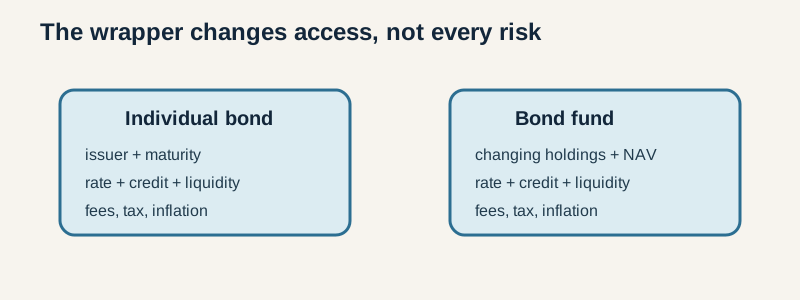 The wrapper changes access and cash-flow control, not every underlying risk.
Reinvestment is a real decision
With an individual bond, coupons arrive on scheduled dates and principal arrives at maturity if paid. You choose whether to spend or reinvest each cash flow. Reinvestment rates may be lower or higher than the original yield. A callable bond can return principal early when rates fall, creating reinvestment risk.
With a fund, the manager reinvests proceeds under the fund’s policy. Distributions may be automatically reinvested into additional shares, but the share price and income can change. The convenience is real, yet you give up control over the exact maturity date and replacement security.
Ladders and target-maturity funds are not identical
An investor can build a ladder of individual bonds with maturities spread across several years. The goal may be to create a sequence of expected principal dates, while reducing the need to reinvest everything at one rate. A target-maturity bond fund also groups bonds around a stated year, but it remains a fund: holdings can change, expenses apply, and the share price can fluctuate before the target date. The fund’s end date and distribution policy should be read carefully; they do not turn every share into a guaranteed principal payment.
The distinction matters when a reader says, “I want my money back in five years.” With an individual bond, that sentence points to a specific issuer and maturity, subject to default and call risk. With a fund, it points to a planning horizon for selling shares. The market value on that date can be above or below the amount invested. Neither approach can guarantee purchasing power after inflation.
Liquidity, costs, and transparency
Individual bonds can have wide bid-ask spreads or limited trading. A broker’s displayed price may include markups, markdowns, or accrued interest, and the market may be thin. FINRA recommends due diligence on transaction costs and the security’s terms.
Funds make diversification and trading easier, but they charge expenses and may incur trading costs inside the portfolio. ETFs have exchange spreads; mutual funds transact at NAV rather than an intraday quote. Review the prospectus, fee table, holdings, turnover, and trading mechanics.
Taxes and account context
Tax treatment depends on the bond, fund, account, jurisdiction, and the type and timing of income or gain. Municipal-bond funds may have tax-exempt features, but not every distribution is necessarily exempt. A bond purchased at a discount or premium can have tax rules that differ from its coupon. This guide does not calculate a tax result; use current offering documents and applicable local guidance.
Which structure answers which need?
An individual bond may be easier to map to a known maturity and cash-flow schedule, but it demands issue-level research and leaves more concentration and liquidity decisions with you. A fund may offer diversification, small-dollar access, professional management, and easier ongoing exposure, but its price and income remain variable and its holdings can change.
The comparison is therefore about trade-offs:
- Known date versus continuous exposure.
- Issue-level control versus pooled management.
- Potentially simpler cash-flow mapping versus broader diversification.
- Direct transaction and concentration decisions versus fund expenses and NAV/market-price mechanics.
There is no universal winner without a defined objective and constraints.
A practical checklist
Before choosing, ask:
- Do I need a particular maturity date or a continuing bond allocation?
- Can I tolerate market-price changes and a sale at an inconvenient time?
- How much issuer and sector concentration would an individual-bond list create?
- What are the fund’s duration, credit-quality mix, holdings, fees, and turnover?
- How liquid is the individual issue or fund share, and what spread or markup applies?
- Who decides reinvestment, and what happens when rates or credit conditions change?
- Which tax and account rules apply to coupons, discounts, gains, and distributions?
The idea to keep
Choose the structure whose cash-flow and risk trade-offs you understand. An individual bond can provide a defined maturity and direct claim if the issuer pays, but it can be concentrated and hard to sell. A bond fund can diversify and simplify access, but it has a changing NAV, no single principal repayment date, ongoing costs, and continuing exposure to market risk.
Continue through the Bonds & Rates learning path for duration, credit risk, and yield concepts.
This U.S.-oriented educational guide was checked on 2026-09-08. It does not rank products, report current prices or yields, or provide a personalized recommendation. Examples are hypothetical. Fund structures, tax treatment, and legal terms vary. The guide has not received independent human expert review.