How to read a 10-K without reading every page
Learn a repeatable way to read a 10-K: where to start, which sections matter, what to cross-check, and what an annual filing cannot tell you.
In this guide
You do not need to read a 10-K from page one to the last exhibit. Use it as a map: confirm which company and fiscal year you opened, skim the business and risks, read management’s explanation of results, then test that story against the audited statements and notes. Finish by checking the filing date, amendments and any important exhibits.
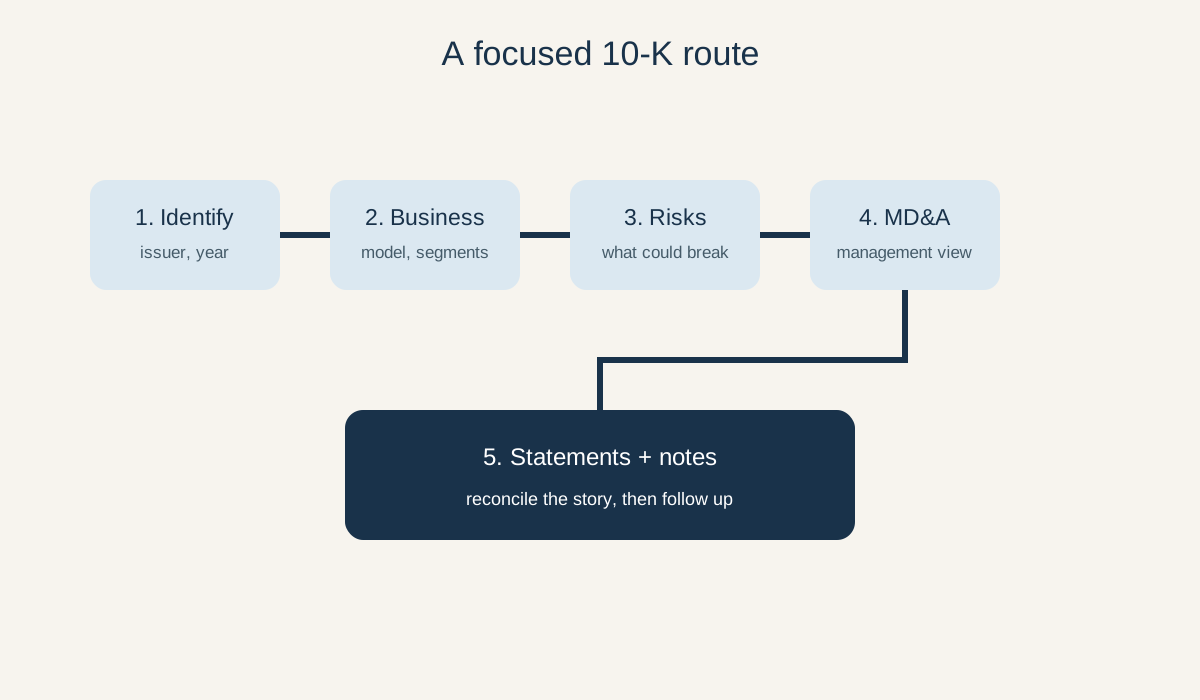 Visual: a fast route through the filing before deeper follow-up.
A Form 10-K is an annual report filed with the U.S. Securities and Exchange Commission by covered public companies. It provides a comprehensive view of the business and financial condition, including audited financial statements. It is not the same thing as a glossy annual report to shareholders, and it is not a recommendation or a forecast.
This workflow is U.S.-focused. Other jurisdictions use different forms and deadlines. The examples below are fictional and contain no live company, price or investment conclusion.
First, make sure you opened the right document
Before reading, write down five identifiers:
- Legal registrant name and ticker (if any).
- SEC Central Index Key (CIK), when available.
- Form type: 10-K, amended 10-K/A, or another filing.
- Fiscal year end and filing date.
- Whether you are viewing the complete filing, inline XBRL document, or a shareholder report that merely incorporates the 10-K.
EDGAR search results can contain subsidiaries, similarly named issuers and multiple years. The filing cover page and header are your identity check. If the company changed its name, merged, or changed fiscal year, note that before comparing periods.
The five-section first pass
1. Business: what does the company actually do?
Start with Item 1, “Business.” Identify the products or services, customers, markets, segments, suppliers and seasonality. Look for plain-language descriptions of how money enters the business and what resources it needs to deliver.
Do not copy the company’s marketing language into your conclusion. Turn it into questions: Which segment pays the bills? Is revenue concentrated in a few customers? Does the company depend on a license, a key supplier or a platform it does not control? If the filing says a market is “highly competitive,” find the concrete competitors, switching costs and constraints elsewhere in the filing.
2. Risk Factors: what could break the story?
Item 1A, “Risk Factors,” lists material risks, generally with the company’s chosen ordering. Read the first page and then search for risks connected to the business model you just mapped: demand, regulation, cyber incidents, debt, foreign exchange, litigation, concentration and execution.
Risk factors are not predictions that every bad outcome will happen. They are disclosure of material possibilities and uncertainties. A long list does not prove a company is riskier than a short list; disclosure style differs. Ask which risks are already visible in the numbers and which would be hard to detect elsewhere.
Notice how a risk is framed. “Could materially affect” tells you severity may be significant, not that an event is likely. Look for concentration percentages, debt covenants, renewal dates or geographic exposure in the notes that make a general warning more concrete. If the filing says a risk is remote or mitigated, treat that as management’s assessment and look for the supporting control, insurance or contract term.
3. MD&A: how does management explain the year?
Item 7, “Management’s Discussion and Analysis of Financial Condition and Results of Operations,” is management’s narrative about performance, liquidity and known trends. Read it after Business and Risk Factors so you can spot what management emphasizes or omits.
For each major change, ask: What moved? Why does management say it moved? Is the explanation supported by cash flow, segment data and the notes? Separate a one-time event from a recurring trend. Watch for changes in accounting estimates, acquisitions, divestitures and non-GAAP measures. Non-GAAP numbers may be useful, but the filing must provide reconciliations to the closest comparable GAAP measure; the reconciliation does not make the adjusted measure a better answer for every question.
4. Financial statements and notes: does the story reconcile?
The audited income statement, balance sheet and statement of cash flows are the core evidence. Start with the three-year columns and the notes, not just a headline revenue number.
- Income statement: revenue, operating costs, interest, taxes and net income. Check whether margins changed and whether per-share figures use a different diluted share count.
- Balance sheet: cash, receivables, inventory, debt, leases, goodwill and shareholders’ equity. Ask what is liquid and what may require future spending.
- Cash-flow statement: cash from operations, investing and financing. Compare operating cash with reported profit and look for working-capital swings.
- Notes: accounting policies, segment definitions, commitments, contingencies, debt maturities, stock compensation, related parties and subsequent events.
An annual filing is not a spreadsheet exercise. A receivable can be an asset but not immediate cash; a profitable company can consume cash while growing; and a large impairment can change accounting profit without being a same-day cash payment. The notes provide the context needed to avoid those shortcuts.
5. Governance and ownership: who can decide what?
The proxy statement is usually a separate DEF 14A filing, but the 10-K points you toward governance and ownership information. Check the number and classes of shares, voting arrangements, directors, executive compensation, related-party transactions and controlling holders. A dual-class structure can give one group more votes than its economic ownership would suggest.
This section helps answer “who controls the company?” It does not answer whether management will make good decisions. Read the risk disclosures and voting results alongside the ownership table.
A repeatable reading order when time is short
Try three passes instead of one marathon session:
Pass one — orientation (10 minutes): cover page, fiscal year, Business, Risk Factors headings, and the table of contents. Mark unfamiliar terms.
Pass two — explanation (30–45 minutes): MD&A, segment discussion, liquidity, debt and the major notes. Write one sentence for the main revenue driver, main cost pressure and main source of cash.
Pass three — verification (20 minutes): compare MD&A claims with the statements, cash flow and five-year selected data when provided. Search for “going concern,” “material weakness,” “impairment,” “covenant,” “related party,” “subsequent event” and “reconciliation.” Read the surrounding paragraphs; search hits without context mislead.
Save the accession number and filing date in your notes. If you later read a 10-Q or 8-K, you can distinguish a new event from information already known in the 10-K.
A transparent fictional example
Assume fictional Northstar Co. reports revenue rising from 100 to 120 units while net cash from operations falls from 18 to 9. The 10-K alone does not prove a problem. You would inspect receivables and inventory, read management’s working-capital explanation, and check whether an acquisition or customer prepayment changed timing. If the cash-flow statement and notes support the explanation, record it as an assumption to monitor—not as proof that the shares are attractive or unattractive.
How to take useful notes
Create a one-page worksheet with four columns: claim, evidence, uncertainty and follow-up. Under “claim,” rewrite management’s explanation in your own words. Under “evidence,” record the page or note number and whether support comes from GAAP statements, a non-GAAP reconciliation, a contract disclosure or an estimate. Under “uncertainty,” note what the filing does not quantify. “Follow-up” can point to the next 10-Q, an 8-K, a proxy statement or a question about a footnote.
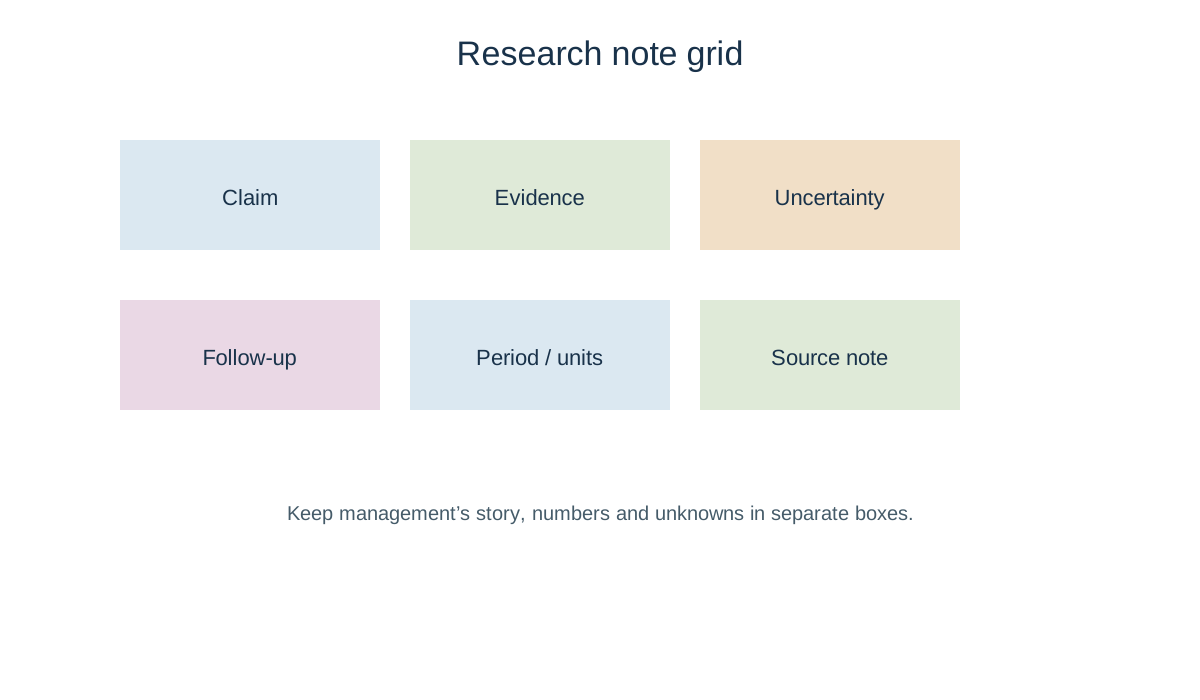 Visual: keep conclusions and unknowns in separate note fields.
Keep units and periods visible. “Millions” versus “billions,” continuing operations versus discontinued operations, and fiscal years that do not end in December can make a comparison look better or worse than it is. When the company changes segment definitions or accounting policies, use restated comparative figures where provided and explain the break in your notes.
Use the table of contents and in-page search as navigation tools. Search for the exact term you need, then read the whole subsection and any linked note. Exhibits can contain credit agreements, material contracts or certificates that explain restrictions mentioned in the narrative. You rarely need every exhibit on a first pass, but you should open the one that governs a risk you may otherwise misunderstand.
Do not turn a single ratio into a verdict. A falling gross margin may reflect mix, pricing or a one-time charge. Rising debt may fund an acquisition or cover an operating shortfall. Preserve the possible explanations until newer filings narrow them; that discipline is more valuable than highlighting every number.
What a 10-K cannot tell you by itself
A 10-K is historical disclosure. It cannot guarantee future earnings, reveal every fraud, tell you the market price you should pay, or replace tax, legal or investment advice. It may omit information from later quarters, private competitors or events that had not yet become reportable. The filing also reflects management’s judgments and accounting estimates.
Use the 10-K as a primary research document, then check newer 10-Qs, 8-Ks, proxy materials and issuer announcements for changes. For the identity of the exact security, see stock ticker, company and share class. For the broader meaning of equity ownership, read what owning a stock means.
The takeaway
Reading a 10-K efficiently means asking a sequence of small questions: What business is this? What can disrupt it? How does management explain the year? Do audited numbers and notes support that explanation? Who controls the votes? The filing can improve the quality of those questions, but it cannot turn uncertainty into a guaranteed outcome.
The goal is not to predict the next quarter from one document. It is to build a dated, checkable understanding that can be updated when new filings arrive.
This is general education for U.S. public-company filings, not personal investment, tax or legal advice. Filing requirements, accounting standards, issuer status and available information vary. Recheck the latest filing and amendments before relying on any detail.