Stock ticker, company, and share class: what exactly are you buying?
A ticker identifies a tradable listing; the company is the issuer; the share class sets your rights. Learn how to verify all three before buying.
In this guide
The short answer is three-part: the ticker is a shorthand label for a listing, the company is the legal issuer, and the share class describes the specific rights attached to the security. A ticker is not the company itself, and a company can have several tickers or classes. Before you buy, match the ticker to the issuer, exchange, currency, security type and class.
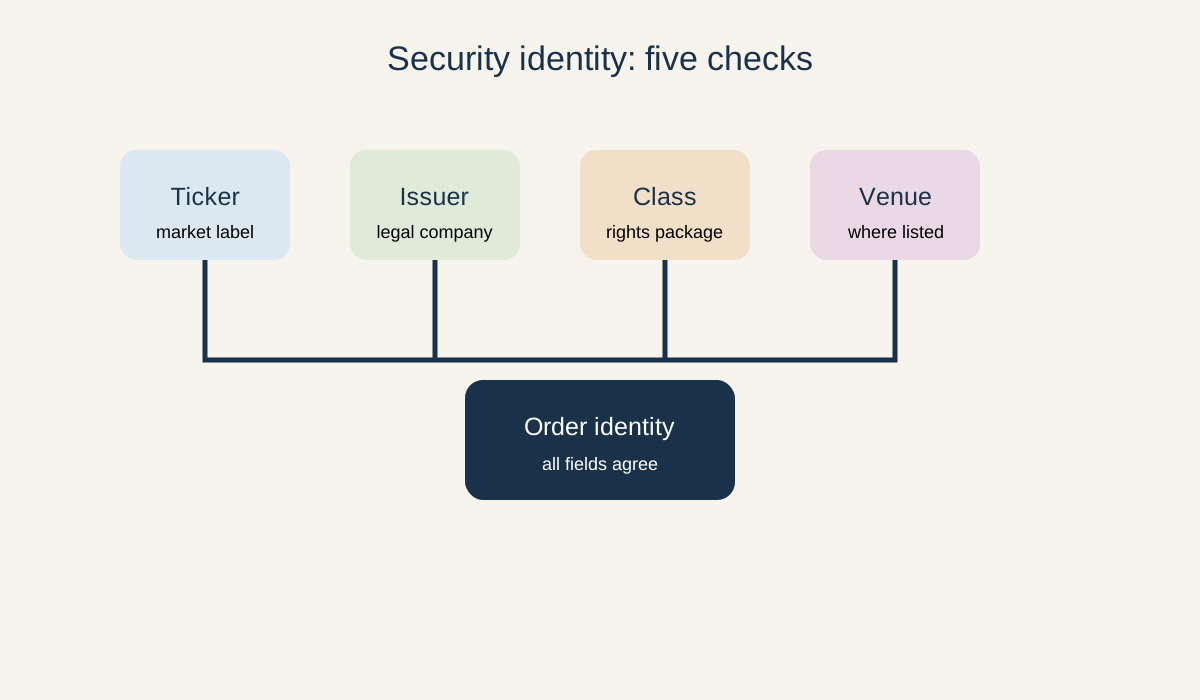 Visual: the fields that should agree before an order is submitted.
If you want the broader meaning of owning equity, see what owning a stock means. For the mechanics of submitting an order, read market orders versus limit orders.
This distinction matters because a familiar name can hide a different instrument: a common share, a preferred share, an American depositary receipt (ADR), an exchange-traded fund, or a derivative may all have symbols that look like ordinary stock. The examples and filing references below use U.S. public-market terminology. Other markets use different identifiers, settlement systems and legal rights.
What each label tells you
Ticker: the trading shortcut
Investor.gov defines a stock ticker (or stock symbol) as a short abbreviation assigned to a publicly traded U.S. common stock. Symbols can be one to five letters, and extra letters may carry information in some systems—for example, “Q” has historically signalled bankruptcy. A ticker helps an exchange and broker route an order; it is not a legal description of ownership.
Symbols can be reused after a company changes listing, and similar symbols can exist across exchanges or for different instruments. A quote screen may also display a suffix, share-class letter, exchange code or currency marker. Treat the symbol as a search key that must be checked against the instrument’s full name and listing venue.
Company: the issuer behind the security
The company is the legal entity that issued the security. Its filings identify the registrant, state or country of incorporation, reporting status and businesses. The company owns assets, earns revenue and owes liabilities; a share is an equity claim on the company, not a claim on a particular machine or bank account.
Do not confuse an operating brand, parent company and subsidiary. A popular brand may be owned by a listed parent, while a subsidiary may have its own debt or no public shares. In EDGAR, the SEC’s Central Index Key (CIK) identifies a filer. Searching by company name or ticker can lead to the right record, but the CIK and filing header are useful confirmation that you have the intended issuer.
Share class: the rights package
The class is the exact slice of the issuer’s capital structure you own. Common classes may differ in voting power, dividend policy, conversion terms or transfer restrictions. Preferred stock commonly has priority over common stock for dividends and liquidation proceeds, but its terms are security-specific and dividends are not guaranteed.
Two classes can trade under similar symbols while giving holders different votes. A dual-class structure might give founders enhanced voting rights. A new issue or convertible security can dilute an existing holder’s percentage ownership. A proportional stock split changes the number of shares and price per share but, by itself, does not change your ownership percentage.
A practical identification formula
Write the security as:
Issuer + security type + share class + exchange/listing + currency + ticker
For a hypothetical example, “Northstar Holdings, Class B common stock, listed on Exchange X in USD, ticker NSTRB” is more precise than “I bought Northstar.” If the broker instead shows an ADR, depositary share, fund unit or contract tracking NSTRB, you do not own the same legal instrument. The example is fictional and contains no price or recommendation.
Why one company can have more than one ticker
A company may list the same class on multiple venues, issue an ADR for overseas trading, or list separate classes. An ADR represents a specified number or fraction of foreign shares; its price and rights depend on the depositary arrangement and underlying shares. A company can also have debt securities, warrants or preferred stock with their own symbols.
The exchange shown by your broker is therefore part of the identity. Trading hours, currency, settlement, disclosure rules and investor protections can differ by venue. A symbol without a venue is incomplete.
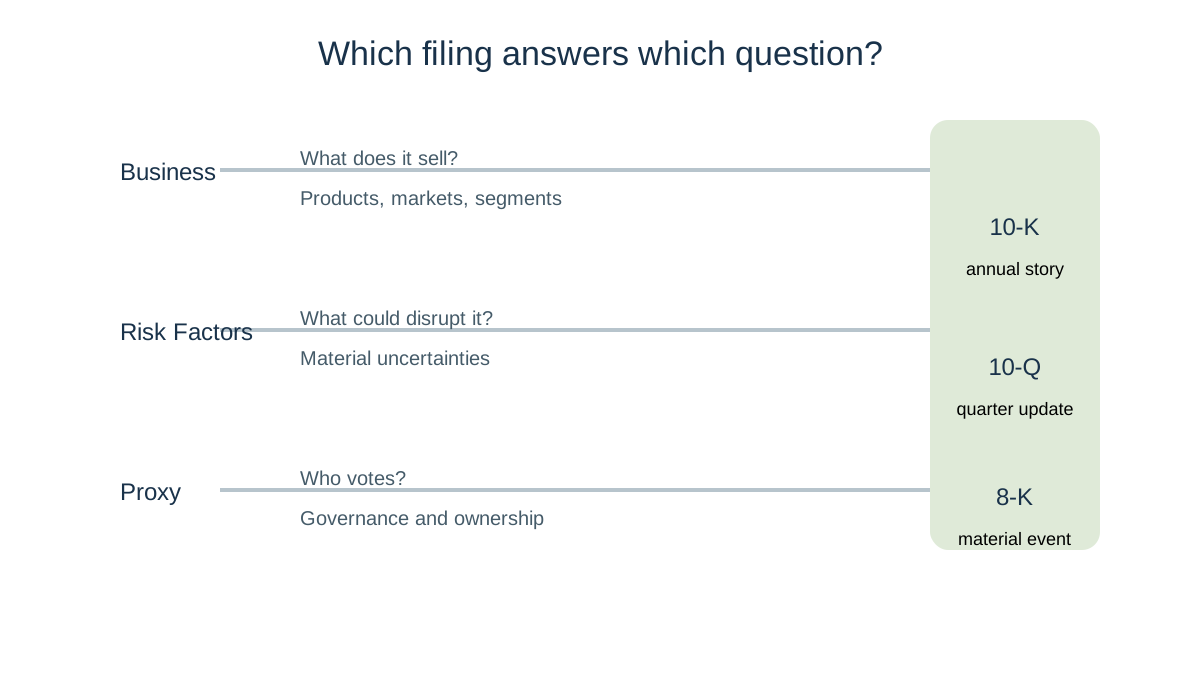 Visual: use the filing that matches the question you are asking.
The same caution applies to “share class” in fund screens. Funds may use Class A, B or institutional labels for different fee or distribution arrangements, while a corporate stock class may primarily change voting power. The words look similar but describe different legal structures. Read the instrument type first, then interpret the class name within that structure.
How to verify the identity before ordering
- Open the instrument details, not only the quote. Record the full legal name, ticker, exchange, currency, security type and class. Check whether it says common, preferred, ADR, fund, warrant or another product.
- Check the issuer’s primary source. Use the company’s investor-relations site and the regulator’s filing database. In EDGAR, compare the filing header, registrant name and CIK; do not rely on a third-party search result alone.
- Find the rights document. The prospectus, charter, annual report and proxy statement can describe voting, dividends, conversion, redemption and class rights. Read the relevant section rather than assuming all shares are equal.
- Check corporate actions. Splits, mergers, name changes, conversions and new issues can alter symbols or share counts. Confirm the effective date and what your broker will deliver.
- Confirm the order ticket. Before submission, compare the order’s symbol, venue, currency and quantity with your notes. A market order or limit order controls execution, not whether you selected the intended issuer.
Which SEC filing answers which question?
For covered U.S. public companies, the SEC’s EDGAR guide provides a useful map:
Scroll sideways or use arrow keys to read the full table.
| Question | Filing or record to start with | What it can clarify |
|---|---|---|
| What does this company do and what are its major risks? | Form 10-K | Annual business description, audited financial statements and risk factors. |
| What changed this quarter? | Form 10-Q | Quarterly financial and management updates. |
| Did a significant event occur? | Form 8-K | Specified material events and exhibits. |
| Who votes and what proposals are on the ballot? | DEF 14A proxy statement | Governance, director elections, executive compensation and beneficial ownership disclosures. |
| Which filer, series or class is this? | EDGAR company/database search | CIK plus series, class/contract name and ticker fields where available. |
Not every issuer files every form, and exemptions, amendments and deadlines matter. A filing’s existence is not evidence that a security is suitable or safe. Read footnotes, risk factors and the description of capital stock.
Common traps
Brand equals issuer. A brand name in an app may be a subsidiary or product. Follow the legal registrant.
Same ticker, same security. Symbols can vary by venue or suffix. Verify the exchange and full instrument name.
One share, one vote. Multiple classes can carry unequal votes or different economic terms.
Price is identity. A low-looking quote may reflect a split, ADR ratio or different currency. Price does not tell you what the instrument is.
Buying a share sends cash to the company. In the secondary market, your money normally goes to the seller. The company receives capital when it issues securities or conducts an offering, subject to the transaction terms.
A platform label is a legal guarantee. Broker data can be delayed, abbreviated or wrong. Use primary documents when the distinction affects your rights.
A worked research routine
Suppose an app shows “NSTR” beside a familiar company name. Start by opening the instrument factsheet. You might discover that NSTR is Class A common stock on one exchange, while NSTR.B is Class B on another. The two listings could have different voting rights, currencies and settlement cut-offs. The app’s company page may combine them for convenience, but your order still targets one exact security.
Next, search the issuer in EDGAR and read the latest annual report’s cover page and “Description of Capital Stock.” Compare the class names and outstanding share counts with the proxy statement. If the company has convertible preferred shares or depositary receipts, read those terms too. A database match is a starting point; the governing document is where the rights are defined.
Finally, save a short identity note before you place an order: issuer legal name, CIK (if applicable), class, exchange, currency, instrument type, and the source document date. This note is useful when a ticker changes after a merger or when a broker displays a consolidated quote. It also makes it easier to explain what you own without relying on a brand nickname.
This routine does not tell you whether the security is cheap, attractive or suitable. It answers a narrower and earlier question: whether the order you are considering corresponds to the security you intended to study.
A safer mental model for beginners
Think of a ticker as a postal shortcut, a company as the building’s legal owner, and a share class as the rulebook for your particular room. The shortcut helps you find the door; it does not tell you who owns the building or what you may do inside.
Before asking whether a stock can rise, ask: “What exact security is this?” Then ask what rights, obligations, risks and costs attach to it. If you cannot answer from the order ticket and a primary filing, pause your research rather than filling the gap with a brand name or a social-media post.
This guide is educational, not personal investment, tax or legal advice. Rights, disclosure requirements, custody and remedies depend on the issuer, instrument, venue and your jurisdiction. Prices, availability and broker labels change; verify them at the time of any transaction.