Dividends and share buybacks: two ways companies return capital
Learn how dividends and share buybacks work, how they affect your ownership and per-share results, and what each method cannot guarantee.
In this guide
The difference is simple: a dividend sends cash to shareholders per share, while a share buyback uses company cash to purchase shares, usually in the market. Both can return capital, but they change your position differently. A dividend pays you whether or not you sell; a buyback reduces shares outstanding and may increase your percentage ownership if you do not sell. Neither guarantees a return, and a board can change or cancel a program.
This guide explains the mechanics in U.S. public-market terms. Tax rules, disclosure requirements and shareholder rights vary by jurisdiction and security class.
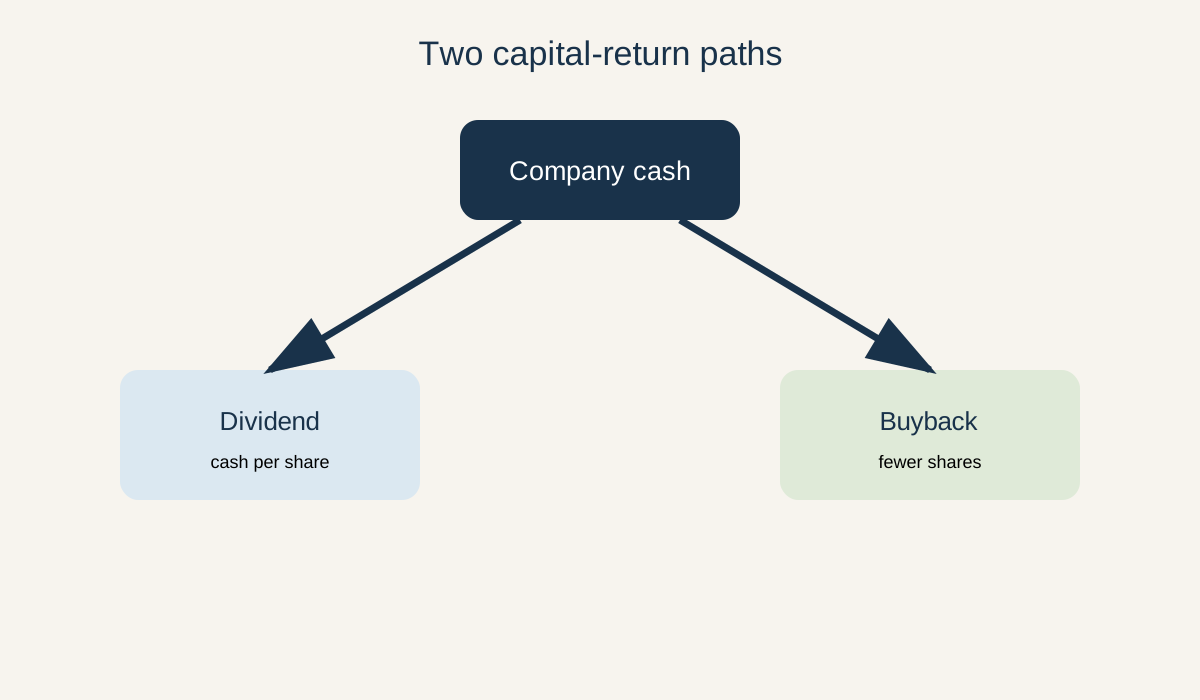 Visual: the two broad routes have different immediate effects.
Dividends: a declared cash distribution
A company’s board may declare a dividend for eligible shares. The announcement normally identifies an amount per share, a record date and a payment date. Owning the stock on the relevant record date does not make future payments certain: the board may reduce, suspend or omit a later dividend, and preferred-stock terms can differ from common-stock terms.
Dividends use corporate cash. A profitable company may retain earnings for operations, debt reduction, acquisitions or a cash buffer instead of paying shareholders. “Profit” and “cash available for distribution” are not identical. Review the cash-flow statement and restrictions in the company’s filings.
If you reinvest a dividend, you receive additional shares rather than cash. That can increase future exposure, but it does not remove market risk. A dividend is not free money: on the ex-dividend date, the market price can adjust for the distribution, while taxes, fees and price movements affect the outcome.
The calendar matters. A declaration date is when the board announces the payment. The ex-dividend date is the first day a buyer generally does not receive that declared dividend under the applicable settlement rules. The record and payment dates complete the process. Broker displays can simplify these labels, so confirm the issuer’s notice rather than trading solely for a date.
Buybacks: the company purchases its own shares
A board may authorize a repurchase program stating a maximum dollar amount or number of shares. Authorization is permission, not a promise that the company will spend the full amount. Actual purchases depend on price, cash, market conditions, legal requirements and management discretion. Programs can be modified, paused or ended.
When shares are repurchased and retired, shares outstanding fall. If earnings stay constant, earnings per share can rise mechanically because the same earnings are divided among fewer shares. Your percentage ownership can also rise if you keep your shares.
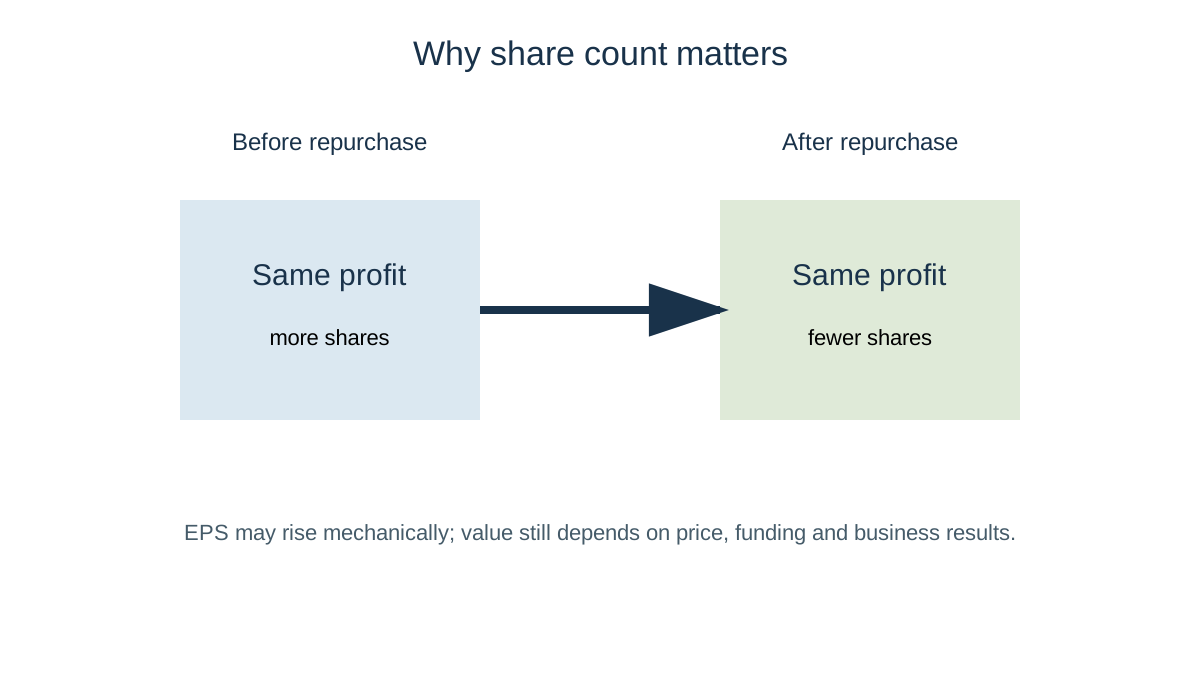 Visual: fewer shares can change per-share arithmetic without proving value creation.
But these effects are not guaranteed: the company may repurchase shares at an unattractive price, issue new shares for compensation, or use cash that could have supported the business.
Some repurchased shares remain in treasury and may later be reissued. A buyback can therefore affect share count over time without producing a permanent reduction. Read the issuer’s reconciliation of beginning shares, repurchases, employee awards and ending shares.
Repurchases can occur through open-market purchases, tender offers or privately negotiated transactions, each with different timing and disclosure. An authorization may be announced when no purchase has happened. A company can also buy shares while issuing new shares for employee compensation, leaving the net reduction smaller than the headline authorization suggests.
A transparent fictional example
Assume a fictional company earns $100 million and has 100 million common shares. EPS is $1. If it buys back 10 million shares and profit remains $100 million, EPS becomes $1.11 before considering taxes, costs, new issuance or business changes. A shareholder who keeps 1,000 shares owns a slightly larger percentage of the company.
Now assume the company paid $120 per share for the repurchase while the business later proves worth less. The share-count arithmetic still works, but capital allocation may have been poor. Conversely, a buyback at a favourable price may be useful, yet no announcement tells you the future price or value. The example illustrates mechanics, not a recommendation.
Side-by-side comparison
Scroll sideways or use arrow keys to read the full table.
| Question | Dividend | Share buyback |
|---|---|---|
| What happens first? | Eligible holders receive cash per share. | Company uses cash to purchase shares. |
| Who receives cash? | Shareholders who receive the distribution. | Sellers who tender or sell shares. |
| What happens if you do nothing? | You receive cash, subject to eligibility and tax rules. | Your percentage ownership may rise if shares are retired. |
| Flexibility for the board | A regular dividend can create expectations; cuts may be unpopular. | Authorization can usually be varied, paused or unused. |
| Main unknowns | Future declaration, cash sustainability and tax treatment. | Purchase price, timing, shares retired and later issuance. |
The table describes common mechanics, not universal legal outcomes. Read the specific plan, charter and filing.
Tax treatment is deliberately not summarized as a universal rule here. Dividends may be taxed when paid; selling into a buyback may create a gain or loss; withholding and account rules differ across countries and account types. A company’s choice of method does not determine your personal tax result.
How to evaluate the decision without treating it as a signal
Ask what the company could do with the cash first: invest in productive projects, strengthen the balance sheet, repay expensive debt, acquire a business, or hold a reserve. A distribution can be reasonable when internal opportunities are limited, but that is a question about expected alternatives, not a rule that mature companies must pay.
Then check funding. Borrowing to fund a payout changes leverage and interest obligations. A buyback may offset employee share issuance rather than reduce total shares. A dividend may be funded by a temporary cash balance. Look at the balance sheet, cash flows, debt covenants, share-count footnote and management’s capital-allocation discussion in the 10-K or other primary filings.
Do not infer quality from a headline “yield,” a larger authorization or a rising EPS alone. A high yield can reflect a falling share price; a larger EPS can reflect fewer shares while total profit is flat; and an authorization can remain partly unused. For filing context, see what owning a stock means.
Risks and limits
- Dividends can be cut, suspended or taxed differently from capital gains.
- Buybacks can destroy value if management overpays or sacrifices resilience.
- Both methods reduce cash that could fund growth, debt repayment or emergencies.
- Share-based compensation and new issuance can offset a repurchase.
- A distribution does not protect you from a falling share price or business failure.
- Cross-border withholding, account type and security class can change the result.
What to record in a research note
Save the declaration or authorization date, amount or maximum, record/ex-dividend date, payment or purchase period, shares outstanding before and after, funding source, and the latest filing date. Separate what the board authorized from what the company actually paid or repurchased. Use the company’s filings and regulator database rather than a stale app summary.
The takeaway
Dividends deliver cash per share; buybacks alter the share count through purchases. The better question is not which method is automatically superior, but what the company can afford, what alternatives it has, whether the price is sensible, and how your jurisdiction treats the distribution. This is general education, not personal investment, tax or legal advice. Verify current terms before relying on any payout or repurchase claim.