Target-date retirement fund families compared: Vanguard, Fidelity, and iShares
A neutral guide to comparing Vanguard Target Retirement, Fidelity Freedom Index, and iShares LifePath Target Date by glide path, implementation, cost, access, and risk.
In this comparison



Target-date funds are designed to package a diversified retirement portfolio into one holding. The year in the name is an approximate planning date, not a promise that the account will reach a particular balance or that the fund will stop changing on that day. This documentation review compares Vanguard Target Retirement, Fidelity Freedom Index, and iShares LifePath Target Date. It does not rank them, recommend one, or claim hands-on testing.
Official product pages
- Vanguard Target Retirement — Visit official product page
- Fidelity Freedom Index — Visit official product page
- iShares LifePath Target Date — Visit official product page
The assigned brief originally named Schwab Target Index. iShares is used here as a documented substitute because an exact, authorized Schwab logo could not be verified for local use in this research pass. That is a scope change, not a conclusion that the families are identical.
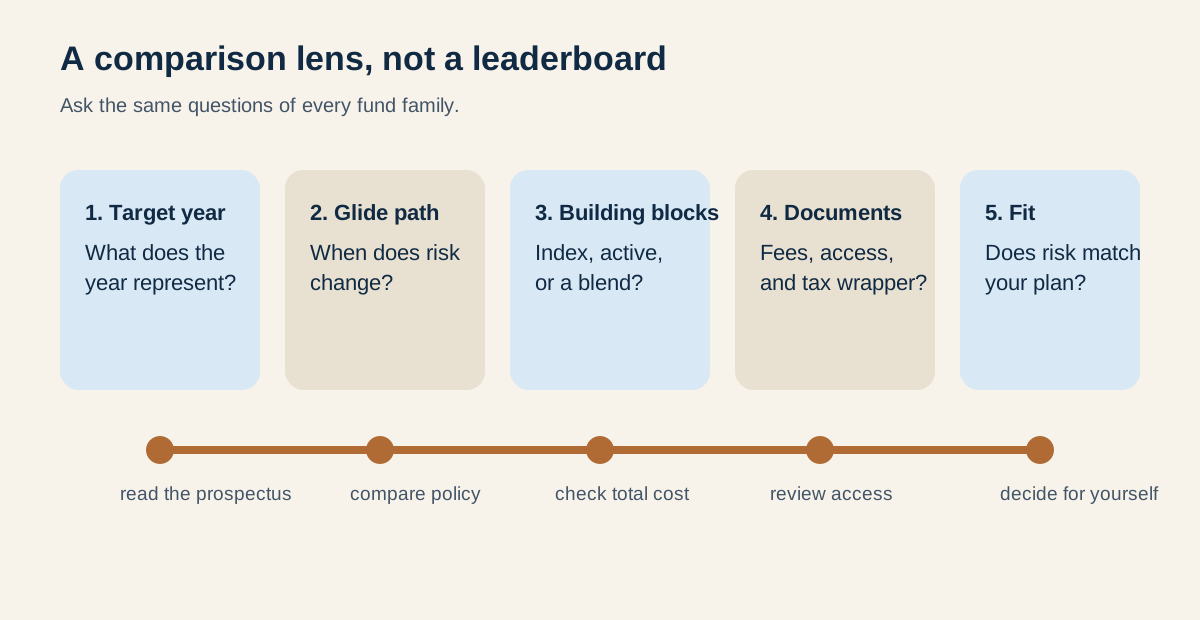
Caption: Compare the same five questions—target year, glide path, building blocks, documents, and personal fit—across every family.
What all three families are trying to do
Each family uses a target year to organize a changing mix of growth and defensive assets. Vanguard describes its funds as a complete retirement portfolio in one fund and says the allocation gradually becomes more conservative. Fidelity describes Freedom Funds as a single investment that is diversified and professionally rebalanced; its Freedom Index line appears alongside active and blended Freedom choices. iShares says each LifePath target-date fund becomes progressively more conservative as the specified date approaches.
That convenience has a trade-off: one fund can hide decisions you still need to understand. The target year may not match your actual retirement, withdrawals, pension, tax situation, or risk capacity. The fund can lose value before, at, or after the target date, and diversification cannot remove market, inflation, interest-rate, credit, or longevity risk.
The first comparison: glide-path policy
A glide path is the schedule for changing the portfolio over time. Do not compare only the year printed on the label; compare what happens around that year and after it.
Vanguard Target Retirement
Vanguard’s first-party glide-path material describes an index-based series that continues through retirement. Its institutional explanation says the default path starts with a high equity exposure for younger investors, reduces equity exposure as retirement approaches, and keeps evolving after the target date toward a retirement-income allocation. The fund prospectus and current allocation pages are the right place to confirm a specific vintage’s holdings and share class.
Fidelity Freedom Index
Fidelity’s Freedom pages say the asset mix becomes more conservative as the target date approaches. Fidelity’s strategy material also describes a path that keeps adjusting after the target year until it resembles the Freedom Index retirement allocation. That makes “retirement” a phase in the design rather than a hard stop. The exact slope and underlying funds can differ by vintage and share class, so read the current prospectus or fact sheet for the fund you are actually considering.
iShares LifePath Target Date
iShares’ investment-goals page explains that the target date is the approximate year an investor plans to start withdrawing money and that the allocation becomes progressively more conservative as the date approaches. Its 2026 prospectus supplement documents a revised glide path for the LifePath Target Date ETF lineup. The current prospectus, not a generic chart, should control any decision about a particular year.
The practical question is not which curve looks most attractive. It is whether the timing and landing allocation fit your expected withdrawals, other retirement income, and ability to tolerate a drawdown.
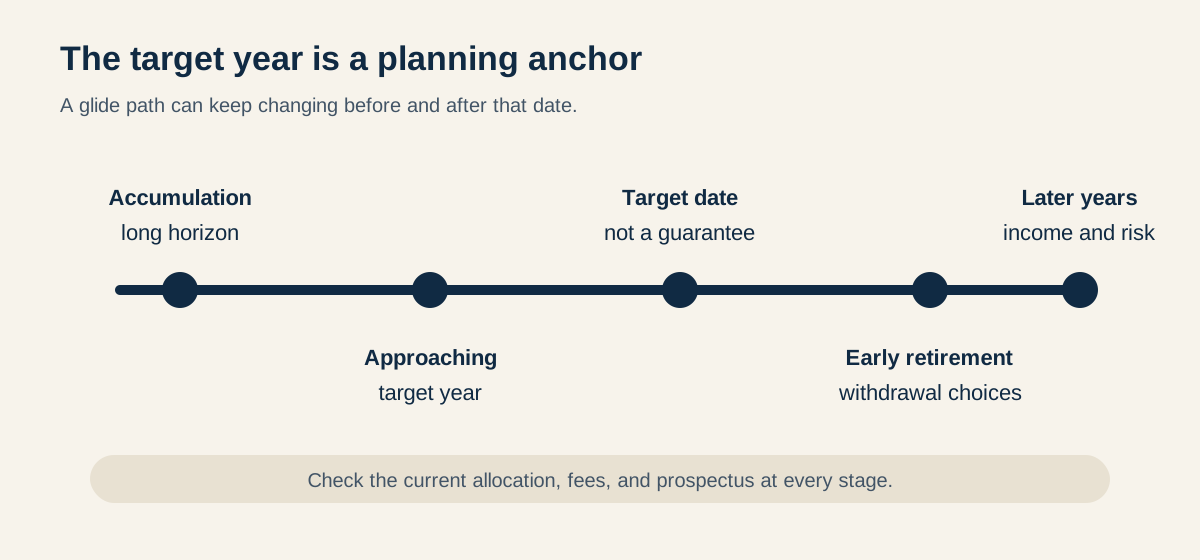
Caption: The target year is a planning anchor; allocation, fees, and withdrawal risks still matter before and after it.
The second comparison: what sits underneath
“Index” describes an important implementation choice, but it does not describe the whole portfolio. A target-date index fund can hold several underlying index funds, and those building blocks can cover U.S. and non-U.S. stocks, government and corporate bonds, inflation-sensitive assets, or cash-like exposures. The wrapper also matters: Vanguard and Fidelity’s named products are mutual-fund families, while iShares LifePath Target Date products in the cited lineup are ETFs. That wrapper affects trading, tax handling, plan availability, and the documents you should read.
Vanguard presents its Target Retirement series as index based and globally diversified. Fidelity offers separate active, blend, and index Freedom families; this article focuses on the index family, not the active Freedom funds. iShares’ LifePath range uses ETFs and publishes a prospectus and product material for each target-date vintage. None of these descriptions is a forecast of returns, and none makes the funds interchangeable.
The third comparison: cost and access
Expense ratio is only one part of total cost. Compare the current expense ratio for the exact share class, the fund’s underlying expenses, bid-ask spread where relevant, transaction rules, plan-level fees, and any advisory or recordkeeping charge. A low published ratio does not answer every cost question.
Access can be decisive. A workplace plan may offer a collective trust or an institutional share class that is not the same vehicle as a retail mutual fund. An ETF may be easy to buy in a brokerage account but unavailable in a particular employer plan. Minimums, settlement, automatic contributions, tax treatment, and exchange rules can change the practical result. Use the current prospectus and your plan’s investment menu rather than assuming the cheapest-looking label is available to you.
Risks and limits to keep visible
- A target-date fund is not guaranteed, including at or after the target date.
- The fund’s allocation can be wrong for your actual retirement age or cash-flow needs.
- Equity declines near retirement can interact with withdrawals and sequence-of-returns risk.
- Bonds bring interest-rate, credit, and inflation risk; international holdings add currency and country risk.
- A single-fund solution can make it easy to overlook emergency savings, taxes, insurance, and other income sources.
- Past performance, ratings, and a provider’s scale do not predict your outcome.
A decision checklist without a winner
- Write down the year you expect to begin meaningful withdrawals, not only the year you hope to stop working.
- Read the glide-path chart for that vintage, including the years after the target date.
- Identify the underlying funds and whether the implementation is index, active, or blended.
- Compare the exact share class, total cost, spread or transaction mechanics, and plan fees.
- Stress-test a bad market year alongside your other income and cash reserves.
- Revisit the choice when your retirement date, savings rate, health, or household income changes.
This article is educational information, not individualized investment, tax, or legal advice.