Secured vs. unsecured debt: how collateral changes the risk
Learn how collateral changes secured and unsecured debt, what default can put at risk, and which contract questions to check before borrowing.
In this guide
The short answer: secured debt is tied to specific collateral, while unsecured debt is not. A mortgage is secured by a home; an auto loan is secured by a vehicle. A typical credit-card balance, medical bill, or signature personal loan is unsecured. If you stop paying secured debt, the lender may have rights to the pledged asset under the contract and applicable law. If you stop paying unsecured debt, the lender cannot simply take a named asset because none was pledged, but it may still pursue collections, reporting, a lawsuit, or other lawful remedies.
That distinction changes the downside of default. It does not by itself tell you which debt is cheaper, easier to qualify for, or suitable for you. Rates, fees, lien terms, income, credit history, protections, and local law all matter.
The comparison at a glance
Scroll sideways or use arrow keys to read the full table.
| Question | Secured debt | Unsecured debt |
|---|---|---|
| What supports the lender’s claim? | A specified asset or collateral interest | A promise to repay, supported by the borrower’s credit and contract |
| Common examples | Mortgage, auto loan, home-equity loan, some secured cards | Credit card, medical bill, many personal loans, many student loans |
| Main default risk | Losing or having the collateral sold, plus possible remaining balance | Collections, credit reporting, lawsuit or judgment, depending on law and contract |
| Is the rate always lower? | No. Collateral can affect pricing, but terms vary | No. Some unsecured credit is expensive; some borrowers receive competitive offers |
| What must you inspect? | Lien, collateral description, insurance, repossession/foreclosure, deficiency | Fees, APR, payment terms, collections, reporting, arbitration, and contract remedies |
“Secured” and “unsecured” describe the creditor’s legal and contractual claim, not a quality rating. The CFPB defines collateral as an asset that secures a loan and that a lender may take if the borrower does not repay. Its youth-financial-education glossary also notes that an unsecured loan can still lead to collection activity, negative credit reporting, or a lawsuit.[1]
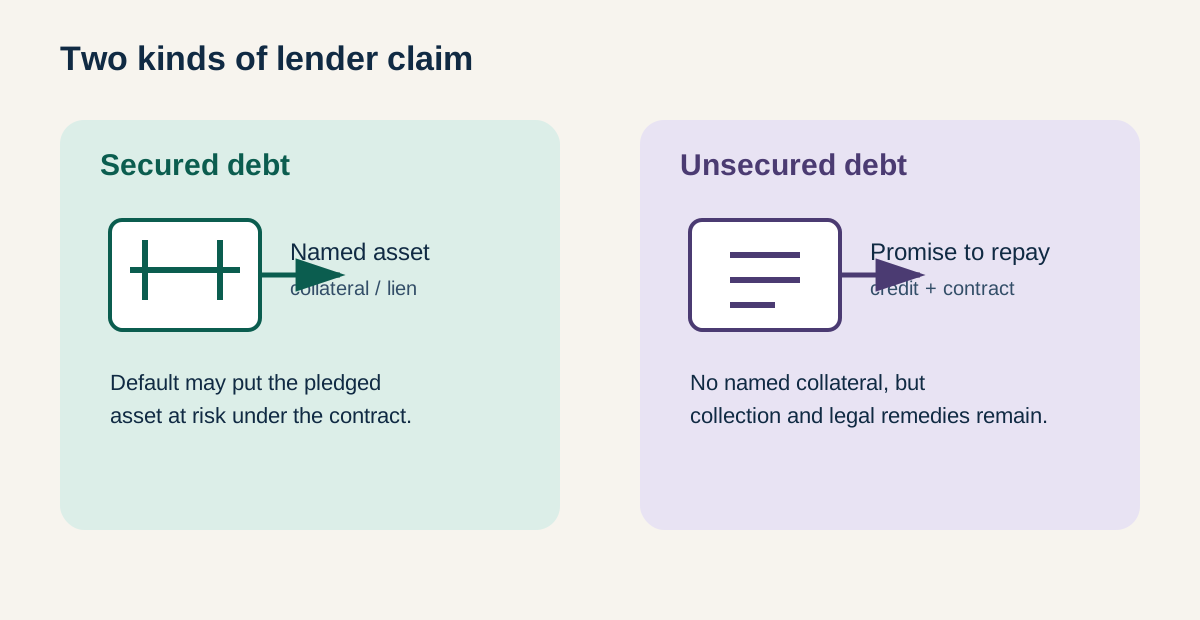
Visual: secured debt names an asset; unsecured debt does not, but both remain contractual obligations.
What collateral actually changes
Collateral is a particular asset identified as security for a debt. A lien or security interest connects the lender’s claim to that asset. The paperwork may identify the property, the events that count as default, notice and cure rights, insurance requirements, who pays taxes or maintenance, and what the lender may do after default.
The practical question is not merely “Is this loan secured?” Ask: secured by what, under which document, and with what process if I fall behind? A home-equity loan puts home equity at risk. An auto loan can put the vehicle at risk. A title loan may use a vehicle title even when the loan is short term. The asset may be essential for housing, work, or family life, so the consequence can be larger than the balance on a spreadsheet suggests.
The CFPB’s teaching material uses a similar distinction: secured loans use property as collateral; if the borrower cannot repay, the lender may take that collateral. An unsecured loan does not give the lender that specific asset, although the borrower still owes the debt.[2]
Collateral does not make default harmless. A lender may sell the asset and apply the proceeds to the debt. If the sale proceeds are less than the amount owed and local law and the contract permit it, a deficiency balance may remain. If the proceeds exceed the debt and allowed costs, the treatment of any surplus also depends on the jurisdiction and agreement. Never assume “they can take the car” means the debt automatically disappears.
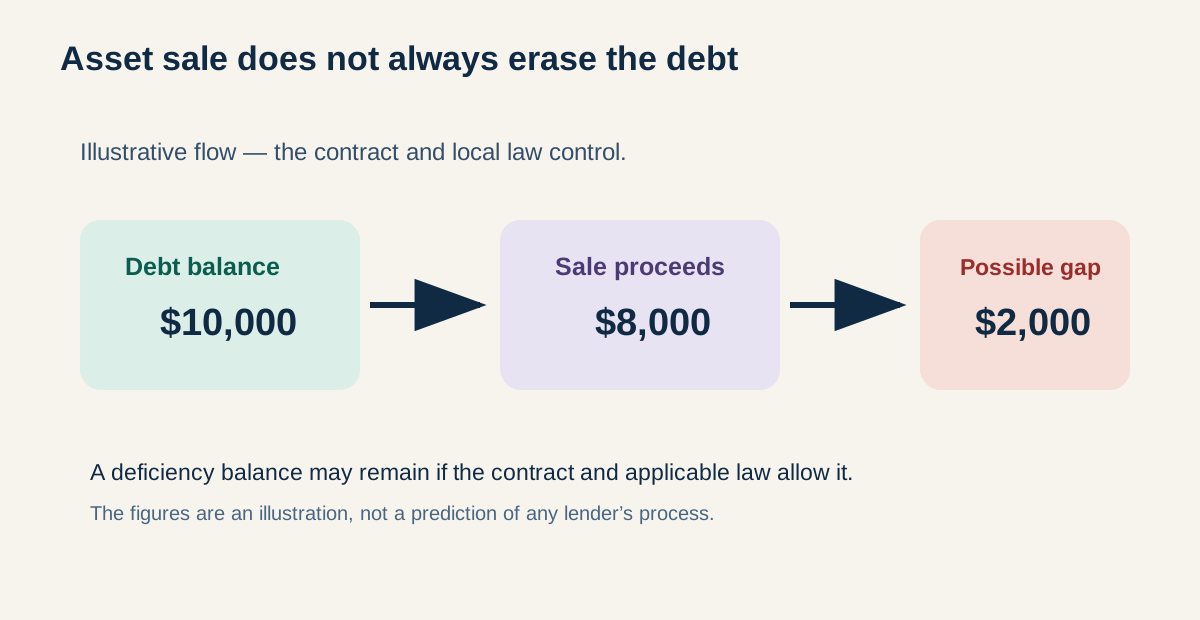
Visual: a shortfall can remain after collateral is sold; the example is not a prediction of a lender’s process.
Unsecured does not mean consequence-free
With unsecured debt, no particular car, house, or savings account is pledged in the original agreement. That removes one direct collateral route, but it does not remove the obligation. The creditor or collector may contact you, report information to a credit bureau where permitted, sue, or obtain a judgment. Enforcement tools and exemptions differ substantially by country, state, province, and debt type.
The U.S. Courts explain the distinction in bankruptcy terms: a secured claim gives a creditor rights in particular collateral, while an unsecured claim generally gives no special right to collect against particular property.[3] That is a classification for a U.S. legal system, not a universal shortcut for every country. Some unsecured obligations can receive priority in bankruptcy, and some secured claims can be affected by valuation, lien validity, exemptions, or other rules.
Debt-management plans are another example of why labels matter. The FTC says a counselor may use a debt-management plan to help repay unsecured debts such as credit-card, student-loan, or medical debts; those plans generally are not designed for debts secured by houses or cars.[4] That does not mean a plan is appropriate, available, or free. It means the collateral distinction affects which remedy or service can even address the debt.
Why people say secured debt can cost less — and why that is not a promise
A lender may view collateral as a source of recovery if the borrower defaults. That can influence the lender’s risk assessment and may be reflected in the offered rate, term, amount, or approval criteria. But “secured loans often have lower rates” is a tendency, not a guarantee. A borrower with damaged credit may receive an expensive secured product. A promotional or short-term unsecured product may have a lower quoted rate but high fees or a rate that changes later.
Compare the whole obligation:
- annual percentage rate and whether it is fixed or variable;
- interest calculation and payment schedule;
- origination, annual, late, appraisal, recording, or other fees;
- total of payments and any balloon or final payment;
- collateral value, lien priority, insurance, maintenance, and required reserves;
- early-repayment terms, rate-reset dates, and what triggers default;
- whether a co-signer or guarantor has separate liability;
- what happens after a sale, surrender, repossession, or settlement.
The FTC’s home-equity guidance is direct about the central risk: using a home as collateral means the lender can take the home if the debt is not repaid.[5] A lower monthly payment or lower headline rate is not a reason to ignore that asset-level risk.
Worked comparison: the same purpose, different risk
Imagine two fictional offers for a $10,000 home-improvement project. Offer A is secured by the borrower’s home. Offer B is an unsecured personal loan. This is an illustration, not a market quote.
Scroll sideways or use arrow keys to read the full table.
| Feature | Offer A: secured | Offer B: unsecured |
|---|---|---|
| Principal | $10,000 | $10,000 |
| Quoted annual rate | 8% fixed | 12% fixed |
| Term | 60 months | 60 months |
| Approximate monthly payment | $202.76 | $222.44 |
| Approximate total of scheduled payments | $12,165.60 | $13,346.40 |
| Asset at direct collateral risk | Home, under the contract | None specifically pledged |
The secured illustration has a lower scheduled payment and lower total interest under these assumptions, but it exposes a much more important asset if the borrower defaults. The unsecured illustration costs more in this simplified math, yet “no collateral” does not mean “no collection or legal risk.” Fees, taxes, insurance, variable rates, late charges, legal costs, and actual contract language could change both outcomes. A lower payment can also encourage a larger loan than the borrower can sustainably repay.
Questions to ask before signing
- What exactly is pledged? Look for the asset description, lien or security-interest language, and whether the collateral includes replacements, proceeds, or other property.
- What counts as default? It may be more than a missed payment: insurance lapse, unauthorized transfer, covenant breach, or another event may matter.
- What notice and cure period applies? Do not assume the lender must wait a fixed number of days or offer a particular workout.
- Can the lender pursue a deficiency? Check the contract and local law after repossession, foreclosure, or sale.
- Who pays for protection of the collateral? Insurance, taxes, maintenance, appraisal, and recording charges can be part of the real cost.
- Can the rate or payment change? Record reset dates, caps, floors, late fees, and any balloon payment.
- What happens to a co-signer? A co-signer may be responsible even if they never use or possess the asset.
- What are the dispute and collection terms? Note reporting, arbitration, assignment, collector contact, and governing-law language.
- What happens if the asset is worth less? Depreciation, damage, or a weak sale market can leave a gap between the balance and collateral value.
- Which jurisdiction controls? Ask a qualified local adviser when housing, transportation, business assets, insolvency, or a disputed debt is involved.
When to pause and get specific help
Do not reduce a serious decision to “secured is good” or “unsecured is safer.” Pause before signing or missing payments if the debt is tied to your home, vehicle needed for work, essential equipment, a co-signer, a variable rate, a balloon payment, or a debt you do not recognize. Also pause if a lender pressures you to pledge an asset unrelated to the amount borrowed, refuses to provide the contract, or describes the collateral consequences vaguely.
A nonprofit credit counselor, housing counselor, lawyer, licensed insolvency professional, or other regulated adviser may be appropriate depending on the problem and jurisdiction. Verify credentials, fees, conflicts, and the exact service. This article does not endorse a provider or replace local legal advice.
Bottom line
Secured debt gives a lender a claim connected to specified collateral. That can change pricing and recovery options, but it also puts an identifiable asset at risk. Unsecured debt does not pledge a particular asset, yet missed payments can still damage credit, trigger collections, produce a judgment, and create legal or financial consequences.
The useful comparison is not “Which label is safer?” It is: What am I pledging, what will the debt cost in total, what can happen after default, and can I keep the payment sustainable under a realistic setback? Read the contract, preserve a cash buffer for essentials, and get jurisdiction-specific help when the consequences reach beyond a routine payment problem.
Continue with the Debt & Credit learning path, or compare repayment approaches in debt avalanche vs. debt snowball.
Sources
- Consumer Financial Protection Bureau, Financial Terms Glossary
- Consumer Financial Protection Bureau, Differentiating secured and unsecured loans
- U.S. Courts, Chapter 13 Bankruptcy Basics
- Discharge in Bankruptcy
- Federal Trade Commission, How To Get Out of Debt
- Federal Trade Commission, Home Equity Loans and Home Equity Lines of Credit
- Investopedia, Understanding Secured vs. Unsecured Debt