Ally, Discover, and Capital One 360 savings accounts compared
A dated, U.S.-specific comparison of Ally Savings, Discover Online Savings, and Capital One 360 Performance Savings: APY, fees, access, and FDIC identity.
In this comparison



This is a dated comparison, not a “best savings account” ranking. On the official page checked September 8, 2026, Ally listed 3.00% APY. Current numeric rates for Discover and Capital One are not included; confirm them on the official product page before making a decision.
All three are U.S. deposit products. Rates can change before or after opening. Compare the account disclosure, fee schedule, access rules, and legal bank identity for your own situation.
Snapshot (as of September 8, 2026)
Scroll sideways or use arrow keys to read the full table.
| Account | Official APY shown | Fees/minimums | Access and notable terms | Bank/FDIC identity |
|---|---|---|---|---|
| Ally Savings | 3.00% (correct 09/02/26) | $0 monthly; $0 opening minimum | Interest compounded daily; up to 10 limited withdrawals/transfers per statement cycle; no fee for exceeding but repeated excess may lead to closure | Ally Bank, Member FDIC |
| Existing Discover Online Savings | See the current account disclosure | Check the current agreement and transition notice | Existing accounts are transitioning to Capital One 360 Performance Savings; timing and account notices vary | Capital One, N.A., Member FDIC |
| Capital One 360 Performance Savings | Variable; see the official product page | No monthly cycle service charge; no minimum | Interest accrues daily and compounds monthly; online/branch access, but no direct ATM withdrawal from savings | Capital One, N.A., Member FDIC |
The table preserves each bank’s as-of language. “No fees” does not mean every optional service is free, and transfer timing is not a guarantee of final availability at your external bank.
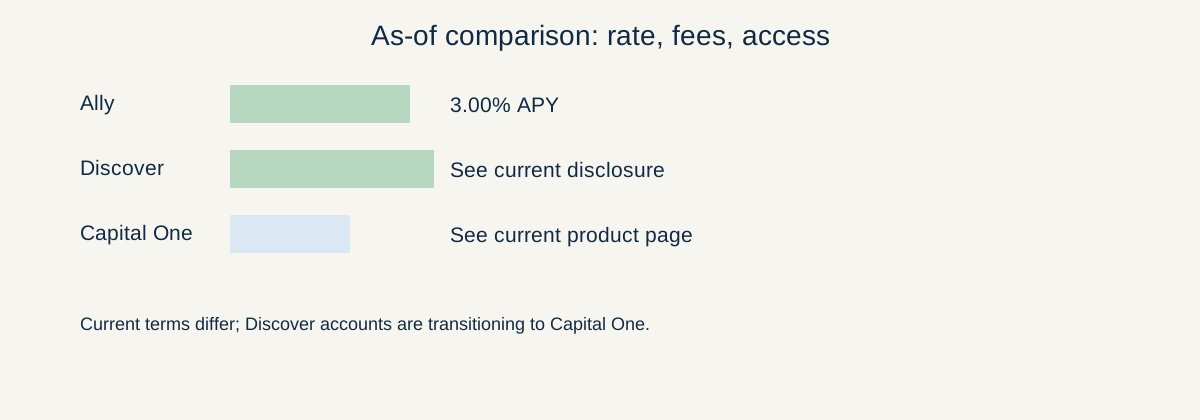
Reference visual: compare the live rate with fees and access terms before choosing an account.
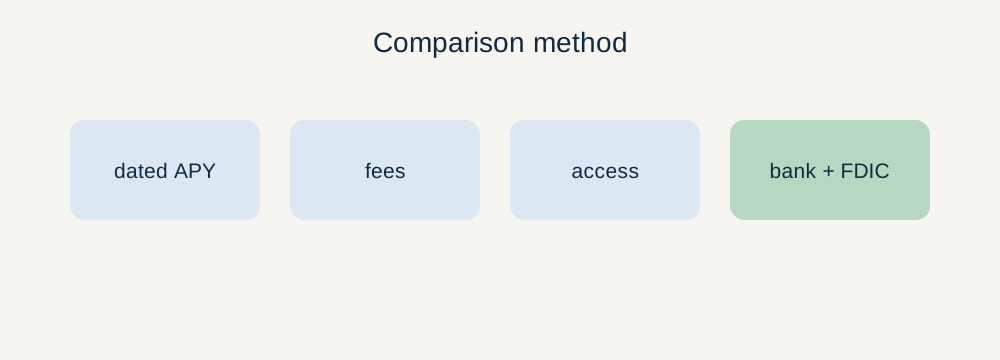
Reference visual: the same criteria are applied to all three products.
Ally Savings
Ally’s official savings page showed 3.00% APY, marked correct as of September 2, 2026. It states no monthly maintenance fee and no minimum balance requirement. Interest compounds daily, the rate is variable, and certain withdrawals and transfers are limited to a combined 10 per statement cycle. Ally says it does not charge a fee for going over the limit but may close an account if the limit is exceeded more than occasionally.
Ally highlights savings “buckets” and automated tools. Those features may help organization, but they do not change the variable-rate or access terms. The page identifies Ally Bank as the insured institution and says deposits are FDIC-insured up to legal limits.
Discover Online Savings
Discover is part of Capital One, and the official transition page says existing Discover Online Savings accounts are becoming Capital One 360 Performance Savings accounts. Customers receive account-specific timing and terms. The public page directs existing customers to sign in or call Discover for their current rate, so this article omits a numeric Discover APY.
This is a transition account, not a separate current application option comparable to a newly opened Ally or Capital One account. Check the notice attached to the existing account for its current rate, fees, routing details, and transition date.
Capital One 360 Performance Savings
Capital One’s official page describes a variable APY, no monthly cycle service charge, and no minimum balance requirement. This comparison does not reproduce a numeric Capital One rate; check the live rate and disclosure on the official product page. The account compounds interest monthly and accrues it daily.
Capital One says 360 Performance Savings can be opened online or at a location, supports transfers from linked accounts, and does not permit direct ATM withdrawals from savings; you would transfer to checking first. It identifies Capital One, N.A. as the FDIC-insured bank. Former Discover customers should review the current joint-insurance treatment and their account-specific transition notice.
What the numbers do—and do not—decide
At a $10,000 balance, a 0.40 percentage-point APY difference is about $40 of gross annual interest before compounding details, taxes, and rate changes. A transfer hold, an access limitation, or a fee on a service you actually use can matter more. None of the three rates is fixed for the future.
FDIC insurance protects eligible deposits up to $250,000 per depositor, per insured bank, per ownership category. It does not protect market investments or purchasing power. Read APR vs. APY for the difference between nominal rates and APY.
A transparent selection method
- Match the account to the job: emergency cash, near-term spending, or a known future date.
- Recheck the live APY and its effective date on the bank’s own page.
- Read the fee schedule and minimum-balance or activity conditions.
- Confirm transfer timing, withdrawal limits, ATM/branch access, and support.
- Identify the legal bank and confirm FDIC status; aggregate balances by ownership category.
- Calculate expected dollars under the same balance, horizon, and tax assumptions.
There is no universal winner in this table. The result depends on which constraints you can reliably follow and which access features your goal requires.
General education only. Rates and terms can change, and this article does not recommend or rank an account.