Cash management accounts compared: Fidelity, Wealthfront, and Betterment
A neutral comparison of Fidelity Cash Management, Wealthfront Cash Account, and Betterment Cash Reserve—covering cash destination, APY snapshots, fees, access, and FDIC conditions.
In this comparison



Cash management accounts can look like savings accounts, but their legal and operational structures differ. Fidelity is a brokerage cash-management account with an FDIC sweep option and possible money-market-fund overflow. Wealthfront and Betterment are nonbank programs that place deposits with partner banks. That difference matters more than a single advertised rate.
Quick comparison
Scroll sideways or use arrow keys to read the full table.
| Provider | What the current page reports | Fees and minimums | Access and coverage questions |
|---|---|---|---|
| Fidelity Cash Management | 1.84% APY on the FDIC Deposit Sweep Program, as of June 12, 2026; variable | No account fee and no account minimum to open | Unlimited ATM-fee reimbursement; ask where overflow cash sits and how FDIC eligibility is allocated |
| Wealthfront Cash Account | 3.30% base APY as of January 30, 2026; variable; conditional boosts may apply | No account fees or minimums | 24/7 instant withdrawals; partner-bank limits and ownership aggregation still apply |
| Betterment Cash Reserve | 3.25% APY as of December 12, 2025; variable; APY Boost is conditional | No fee or minimum balance stated for Cash Reserve; a linked Betterment plan can have its own pricing | Program-bank sweep; $10 minimum deposit for the base APY; verify current insurance allocation and transfer timing |
These are dated snapshots, not promises. Rates can change, and a boost is not the same as a base rate. None of the figures above is a recommendation.
1. Start with the cash destination
The key question is “where is the cash held after I deposit it?” A bank deposit can qualify for FDIC insurance within the applicable ownership and bank limits. A money-market mutual fund is an investment and is not an FDIC-insured deposit. Partner-bank programs can extend coverage across banks, but the same owner’s deposits at a bank are generally aggregated for the limit.
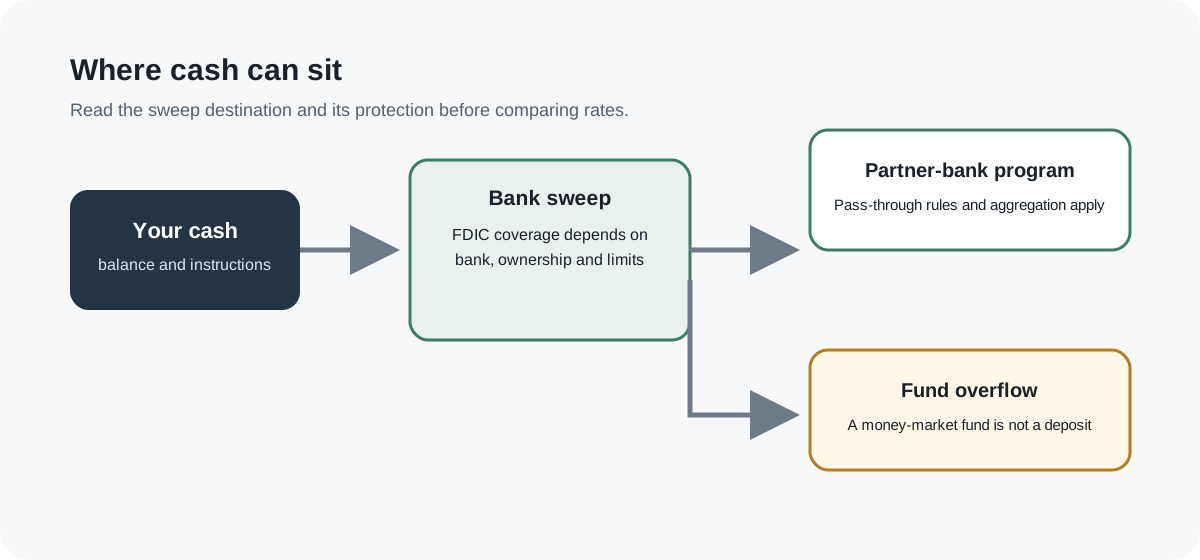
Cash can move through a bank sweep, a partner-bank program, or a fund overflow; check the provider disclosure for the path that applies to your balance.
2. Fidelity Cash Management
Fidelity says it is not a bank. Its Cash Management Account can place eligible cash in the FDIC Deposit Sweep Program, where the displayed 1.84% APY was current on June 12, 2026. Fidelity also describes a “Money Market Overflow” possibility when sweep capacity or other conditions apply. That overflow is a mutual fund, not an FDIC-insured deposit.
The page lists no account fee and no account minimum to open. Fidelity also advertises ATM-fee reimbursement, including unlimited reimbursement globally, subject to its terms. If you want a brokerage-linked cash hub and can monitor the sweep destination, these are the features to investigate first.
3. Wealthfront Cash Account
Wealthfront says it is not a bank and routes deposits through program banks. Its help page reports a 3.30% base APY as of January 30, 2026, with a variable rate and possible boosts tied to qualifying actions. The headline boost should therefore be evaluated as a condition, not as the everyday base rate.
Wealthfront lists no account fees or minimums, 24/7 instant withdrawals, and access to a large no-fee ATM network. Its “up to $8 million” FDIC language depends on available program banks, account ownership and aggregation rules. Read the current bank list and sweep disclosure before assuming the maximum applies to your balance.
4. Betterment Cash Reserve
Betterment’s Cash Reserve page reports a 3.25% variable APY as of December 12, 2025 and a $10 minimum deposit for the base APY. Its separate APY Boost is a time- or eligibility-based offer, so it should not be compared with an unconditional base rate. The page describes no fees or minimum balance for Cash Reserve, while other Betterment services can have their own plan pricing.
Betterment is not a bank. Cash Reserve uses a program-bank sweep and describes FDIC coverage up to stated individual or joint limits, subject to participating-bank availability, ownership and aggregation. Confirm the current disclosure and transfer mechanics before moving emergency cash.
5. Compare the job, not just the rate
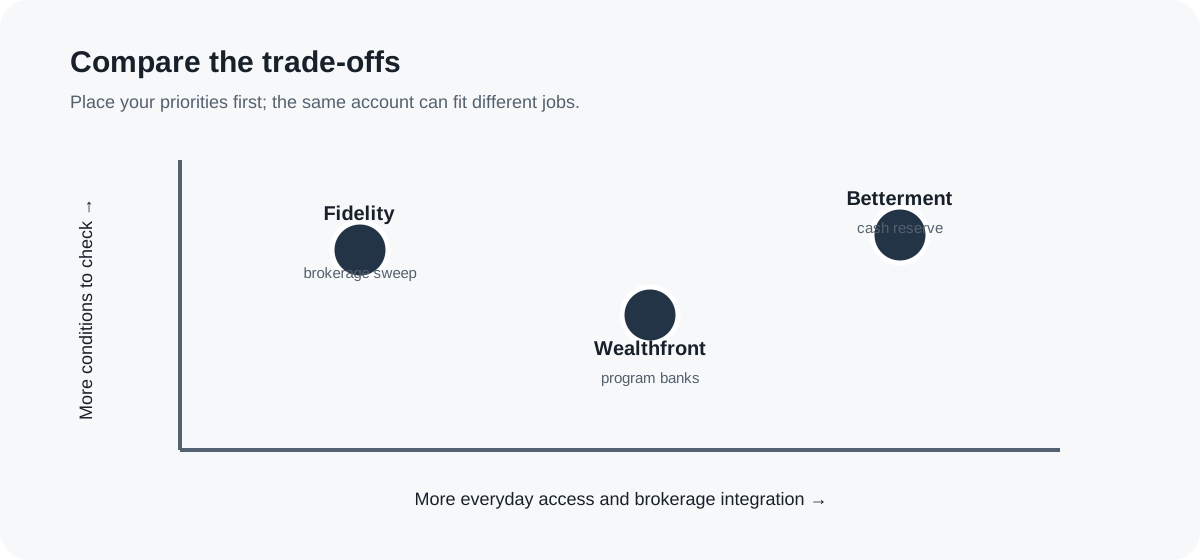
Use the matrix as a question prompt, not a scorecard or ranking.
- If brokerage integration and ATM reimbursement matter, inspect Fidelity’s sweep and overflow disclosures.
- If instant withdrawals and a broad partner-bank program matter, inspect Wealthfront’s current bank list, boosts and aggregation rules.
- If you already use Betterment and want a separate cash reserve, inspect the $10 minimum, current APY, plan pricing and sweep disclosure together.
6. A practical comparison worksheet
- Write the account’s base APY and the date shown beside it.
- List every condition needed for a boost, including direct deposit or linked investing activity.
- Identify the exact cash destination: deposit sweep, partner-bank deposit or fund.
- Check minimums, fees, transfer cutoffs, ATM rules and support hours.
- Map your ownership category and existing deposits before relying on a maximum FDIC figure.
- Recheck the provider disclosure before opening or moving a material balance.
For APY terminology, see APR vs. APY. For a goal-based cash plan, see long-term financial goal planning.
Limits and risks
Rates are variable; a dated APY can become stale. FDIC insurance applies to eligible deposits, not every asset shown in a cash-management interface. Partner-bank coverage is subject to bank availability, ownership categories and aggregation. ATM reimbursement, instant withdrawals and transfer timing have terms. Taxes, inflation, opportunity cost and provider service changes are outside this snapshot.